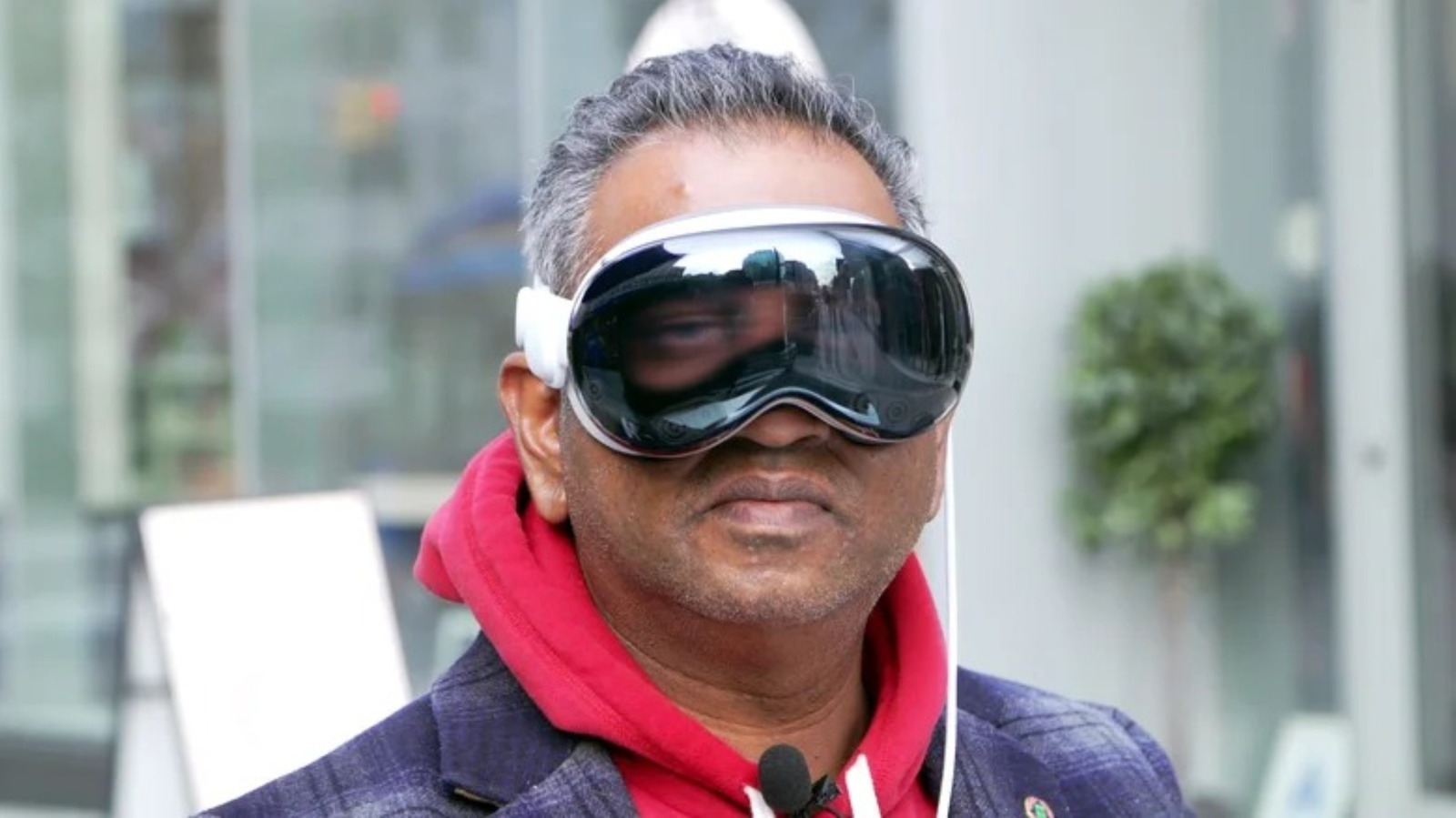
Levent Alpöge says he worked with Claude to discover a proof of the Riemann Hypothesis.
gguy/Shutterstock
A mathematician working for Anthropic claims to have discovered a proof of the Riemann Hypothesis using Claude. According to the BBC, Levent Alpöge used Claude to create a detailed proof of the problem over the course of six weeks. "This problem has been the sacred object in mathematics for me since my childhood," Alpöge said in his announcement.
In very simple terms, Bernhard Riemann proposed way back in 1859 that prime numbers' locations along the number line have a meaningful order. Prime numbers are whole numbers that cannot be divided by anything other than themselves and the number one, if you want them to produce another whole number. As Scientific American notes, the Riemann Hypothesis is often considered the most important unsolved problem in math. The Clay Mathematics Institute recognizes it as one of its Millennium Prize Problems and had promised $1 million to the one who can find the first correct solution for it.
Alpöge has presented his findings in a programming language called Lean that can be used to write and confirm mathematical proofs. He said the complete proof is over 250,000 pages long. In October, OpenAI also posted hundreds of solutions to previously unsolved math problems, as well as progress towards some of them, including the Riemann Hypothesis. It could take some time to confirm those solutions, just as it could take time to confirm Alpöge's Claude proof. James Maynard, a University of Oxford in England mathematician, told The New York Times he was "98 or 99 percent certain" that Alpöge's discovery is accurate. If it is, then Anthropic's AI has solved a 167-year-old problem that even the world's brightest minds couldn't.