
.jpg) 2 hours ago
2
2 hours ago
2
Imagine a parasite that makes you live up to 10 times longer than you naturally would – while also inspiring others to treat you like royalty.
It sure seems like a pretty good deal, but of course there's a catch.
The parasite just wants to keep you lazy so you'll be easy pickings for a giant predator – the bowels of which are the parasite's preferred breeding ground.
Might sound like an intriguing setup for an indie horror movie, but that's the reality for Temnothorax nylanderi ants. Now, thanks to a new study in the journal BMC Genomics, we know more about the biology of this bizarre story.
When ant larvae of this species are fed woodpecker droppings, they can become infected with the tapeworm Anomotaenia brevis – and so begins an insidious cycle.
Infected ants start to change color, becoming pale yellow rather than their usual darker brown. They tend not to grow as big as their nest mates, and even start to smell different – in fact, they seem to emit pheromones that other ants interpret as being from a queen.
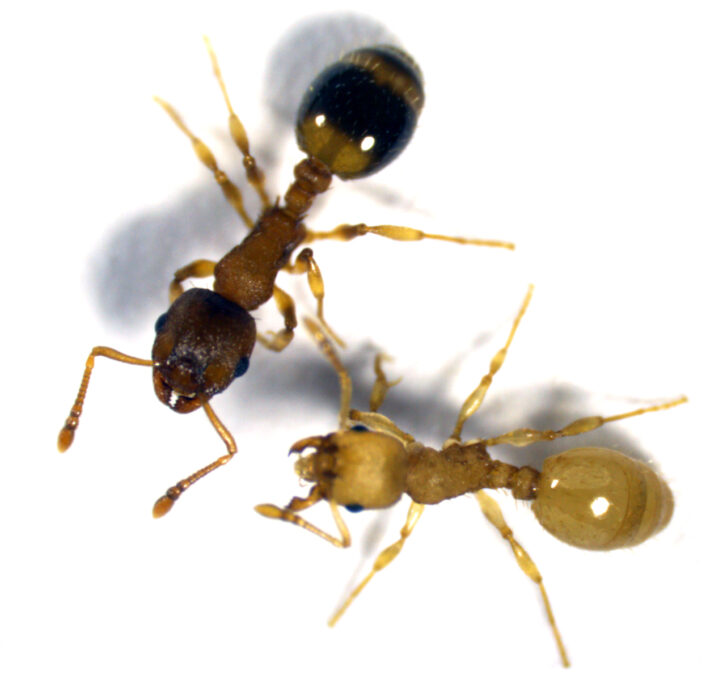 Infected workers (right) become much lighter in color than uninfected ants (left). (©: Susanne Foitzik)
As such, the workers roll out the red carpet for the infected ants. They bring them food, carry them around, and groom them, to the detriment of the rest of the colony.
Infected ants, meanwhile, lean into their new lifestyle. They ignore their chores, rarely leaving the nest during their extended lifespans while generations of regular workers tend to their every whim.
And throughout all this, the tapeworm larvae are just biding their time. Eventually, a woodpecker may come knocking, and while the healthy ants scatter, the infected ones sit there helpless, providing an easy snack.
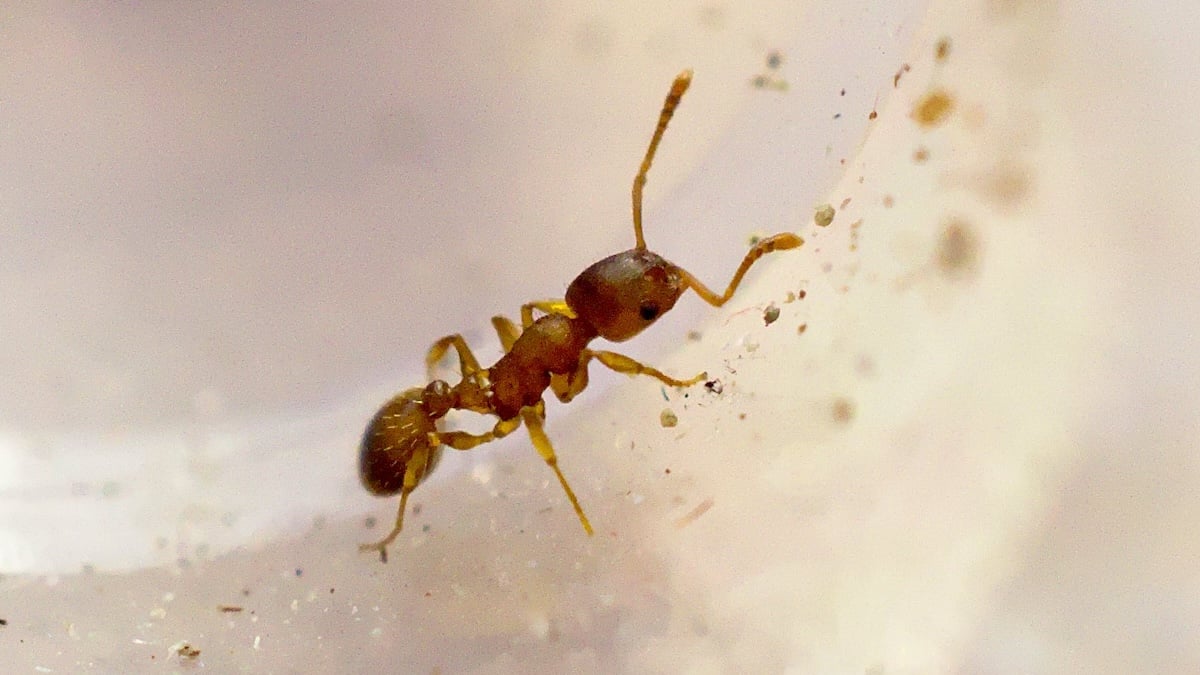 A worker ant of the species Temnothorax nylanderi. (Herman/Wikimedia Commons/CC BY SA 2.0)
Finally, the tapeworm larvae can reach their ultimate goal: the bird's gut. There, they develop into adult tapeworms, breed, and lay eggs – which are then pooped out by the woodpecker to begin the whole cycle over again.
But biologically, how does the tapeworm manage to pull off such extreme manipulation from inside the ant?
To find out, a team of biologists from Johannes Gutenberg University of Mainz (JGU) in Germany and Zhejiang University in China has now investigated the gene expression in infected and uninfected ants, as well as queens.
The researchers examined the ants' brains and fat bodies – a type of tissue in the insects that helps with metabolic and immune function.

Perhaps unsurprisingly, the team found that gene expression in the fat bodies of queens had a lot more in common with infected workers than uninfected ones.
"Our genetic analyses show that the infection does not simply make the ants sick, but alters their physiology in a highly targeted way," says Susanne Foitzik, lead author of the study and a behavioral ecologist at JGU.
"At the molecular level, infected workers showed a profile that was partially queen-like."
These changes were linked to metabolism, the immune system, stress, and aging, which helps explain their longer lives and why other ants give them the royal treatment.
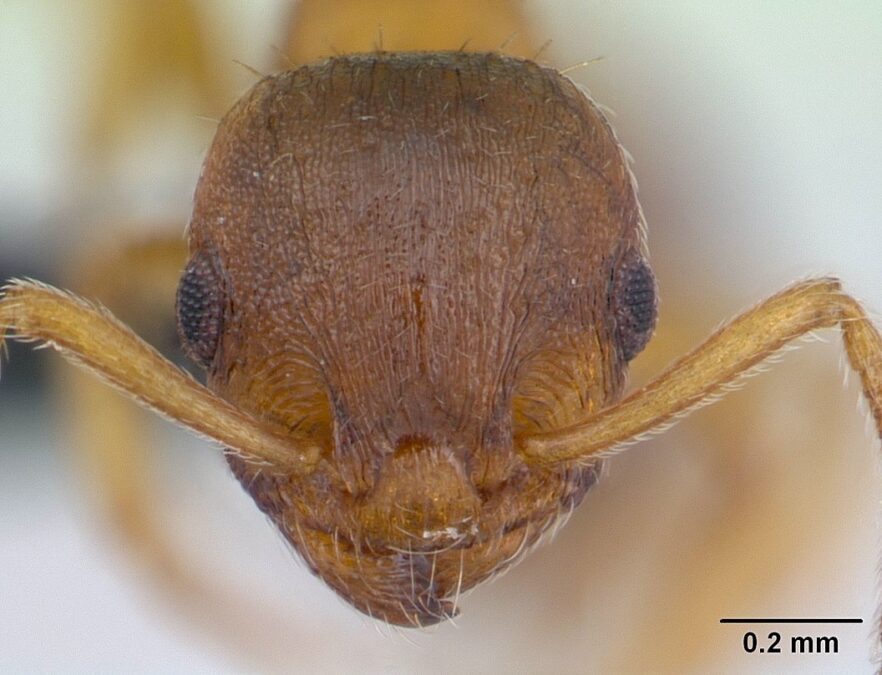 Close-up of the head of a Temnothorax nylanderi. (April Nobile/AntWeb/CC BY 4.0)
Intriguingly, the similarities between queens and infected workers disappeared when the researchers looked at their brains. Infected ants seemed to have suppressed signaling molecules and receptors, which could explain why they seem to entirely lose the work ethic these industrial insects are known for.
Strangely though, the researchers found that the signaling molecules in the brains of infected ants don't really resemble those produced by the parasite.
This could shut down one hypothesis: that the tapeworms use their own peptides to hack into their host's brain.
"The data rather suggest that the parasite influences the ant indirectly by intervening in the host's own regulatory networks, which control metabolism, the immune system, aging, and behavior, among other processes," says Giulia Blasi, first author of the study and a biologist at JGU.
Related: Ant Queens Produce Offspring of Two Different Species, Stunning Scientists
This tapeworm is far from the only parasite that preys on ants in a way worthy of a horror movie.
The cordyceps fungus hacks the nervous system of its victims and turns them into 'zombies', before forcing them to climb a plant and lock their mandibles onto the underside of a leaf.
A stalk then grows from their head, which bursts open, spreading spores to unsuspecting ants on the forest floor below.
Given the choice, we think most ants would probably pick the tapeworm.
The new research was published in the journal BMC Genomics.
This article was fact-checked by Rachel Garner and edited by Rebecca Dyer. While we pride ourselves on our process, we are only human. If you spot a mistake, please let us know.
 English (US)