
.jpg) 1 hour ago
2
1 hour ago
2
If hydrogen becomes widely available to fuel the world's transportation networks and power grids, it could genuinely reduce the carbon dioxide currently being pumped into the atmosphere.
The big problem is finding enough of the stuff.
That's why researchers are excited about a source beneath the Kidd Creek mine in Ontario, Canada, where natural hydrogen gas has been seeping from boreholes for years.
A comprehensive new study has, for the first time, assessed in detail just how extensive this stockpile actually is.
Geologists Barbara Sherwood Lollar from the University of Toronto and Oliver Warr from the University of Ottawa took samples at 35 boreholes around the mine, down to a depth of 2.9 kilometers (1.8 miles).
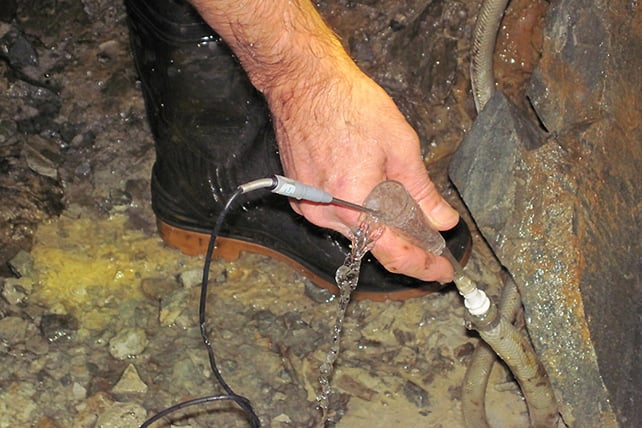 The researchers took samples from dozens of boreholes. (Barbara Sherwood Lollar)
Both hydrogen gas concentration and emission rate were measured, and for up to 11 years in some sections.
Crunching the numbers, the researchers estimate they could provide 4.7 million kilowatt-hours of energy per year – enough to support the energy needs of 400 households for 12 months, on average.
That's a lot of energy that wouldn't have to come from somewhere else.
"The data from this study suggests there are critical untapped opportunities to access a domestic source of cost-effective energy produced from the rocks beneath our feet," says Sherwood Lollar.
"What's more, this provides a 'made in Canada' resource that might be able to support local and regional industry hubs and reduce their dependence on importing hydrocarbon-based fuels."

Hydrogen as a fuel source produces zero emissions – water is the only byproduct – but producing it in pure form is costly and energy-intensive and uses up a lot of fossil fuels (which somewhat takes the shine off its green energy credentials).
Ideally, we need to find natural (or 'white') sources of hydrogen, which could reduce some production costs if they can be extracted economically. The truth is, though, we just don't know how much natural hydrogen might be available.
The element can be produced through chemical reactions that occur in subterranean rocks and the groundwater they contain, and it's long been known that hydrogen can be found beneath the Kidd Creek mine.
What we know now is just how much hydrogen it's actually producing – and that it's a steady rate over time. When it comes to energy production networks, any hydrogen deposits tapped need to be viable in the long term.
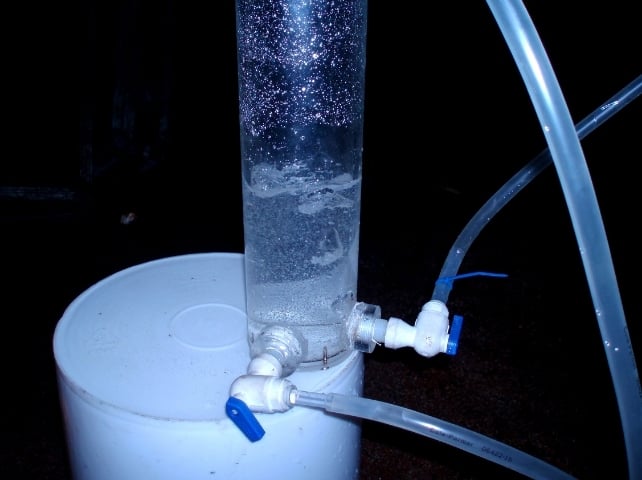 Natural hydrogen is visible as gas bubbles separating from groundwater discharging from rocks of the Canadian Shield. (Barbara Sherwood Lollar)
As an added bonus, the rocks and geological conditions that produce hydrogen are also where highly sought-after minerals can be found. If we can tap into hydrogen reserves in places that are already being mined, that's another win.
"Natural hydrogen is produced in the same rocks where Canada's nickel, copper, and diamond deposits are found, and that are currently under exploration for critical minerals such as lithium, helium, chromium, and cobalt," says Warr.
"The co-location of mining resources and hydrogen production and use mitigates the need for long transportation routes to market, for hydrogen storage, and major hydrogen infrastructure development."
White hydrogen has largely been overlooked up to this point, seen only as interesting to microbiologists studying underground ecosystems and the microbes living in them – microbes that rely on hydrogen to survive.
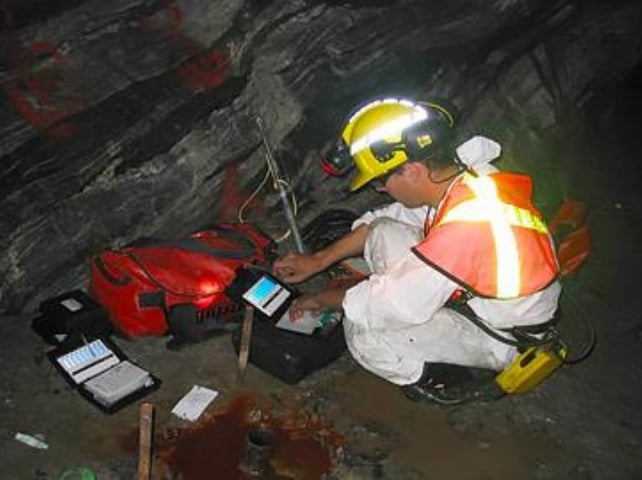 Continuous long-term measurement underground provided evidence of sustained accumulation and discharge of natural hydrogen generated within Earth's crust. (Barbara Sherwood Lollar)
This new study suggests that not only do abundant natural sources of hydrogen exist, but they could also become a useful local or regional energy source in areas where geology and infrastructure align.
Related: Reservoirs of Clean Energy Could Be Hiding Inside Our Planet's Mountain Ranges
"There is a global race to increase hydrogen availability in order to decarbonize and reduce the costs of the existing hydrogen economy," says Sherwood Lollar.
"We now have a better understanding of the economic viability of this resource that can be mapped to hydrogen deposits around the world that are both already known and yet to be discovered."
The research has been published in PNAS.
 English (US)