 Image via Yearling

Published Oct 24, 2026, 10:20 PM EDT
Luc Haasbroek is a writer and videographer from Durban, South Africa. He has been writing professionally about pop culture for eight years. Luc's areas of interest are broad: he's just as passionate about psychology and history as he is about movies and TV. He's especially drawn to the places where these topics overlap.
Luc is also an avid producer of video essays and looks forward to expanding his writing career. When not writing, he can be found hiking, playing Dungeons & Dragons, hanging out with his cats, and doing deep dives on whatever topic happens to have captured his interest that week.
Sign in to your Collider account
Ending a beloved book series is notoriously difficult. The longer readers spend with a world and its characters, the more expectations build around the finale, and even an otherwise excellent series can stumble when it's time to deliver long-delayed answers and cathartic goodbyes. Thus, it's no surprise that many beloved sagas end in at least a bit of disappointment.
Not so with the titles on this list, however. These series got better at the end, culminating in their strongest book. Interestingly, they lean toward fantasy, but some other genres are also well represented. What's important is that all pull off their masterful farewells with confidence and style, delivering a final book that is the undeniable standout in their series.

"The whole story was one big goddamn mess." This series gripped the public imagination in the mid to late 2000s, starting strong with The Girl with the Dragon Tattoo and then finishing off with the perfect capstone in The Girl Who Kicked the Hornets' Nest (though the subsequent continuation novels, not written by the original author, would be disappointing). Tattoo introduced journalist Mikael Blomkvist and hacker Lisbeth Salander through a largely self-contained mystery, while The Girl Who Played with Fire dragged Lisbeth's history to the foreground.
The final book then takes those revelations and builds an intricate conspiracy thriller around the forces that have been exploiting and silencing her for years. It moves into a courtroom setting, giving the spunky antiheroine an opportunity to fight her enemies on terrain beyond physical survival. We get a satisfying conclusion to her arc, and it's cathartic to see Lisbeth at least freeing herself from her demons.
The Expanse by James S.A. Corey
 Image via Hachette Book Group
"When people don't know anything, they love having meetings to talk about it." The Expanse is a masterful sci-fi series by James S.A. Corey (the pen name of writers Daniel Abraham and Ty Franck). By the ninth and final novel, Leviathan Falls, the saga had traveled a remarkable distance from the relatively straightforward mystery of the opening installment, Leviathan Wakes. The original political struggles between Earth, Mars, the Belt, and Laconia are eventually dwarfed by questions about alien technology and humanity's place in a much older cosmic conflict.
Nevertheless, a big part of why Leviathan Falls is so good is because it keeps the focus on the protagonists and their emotions, even in the face of galactic forces. Holden, Naomi, Amos, and the others feel like real people rather than simply pieces being moved around to serve the plot. Not to mention, some of the answers to big, long-standing lore questions are truly juicy.
Malazan Book of the Fallen by Steven Erikson
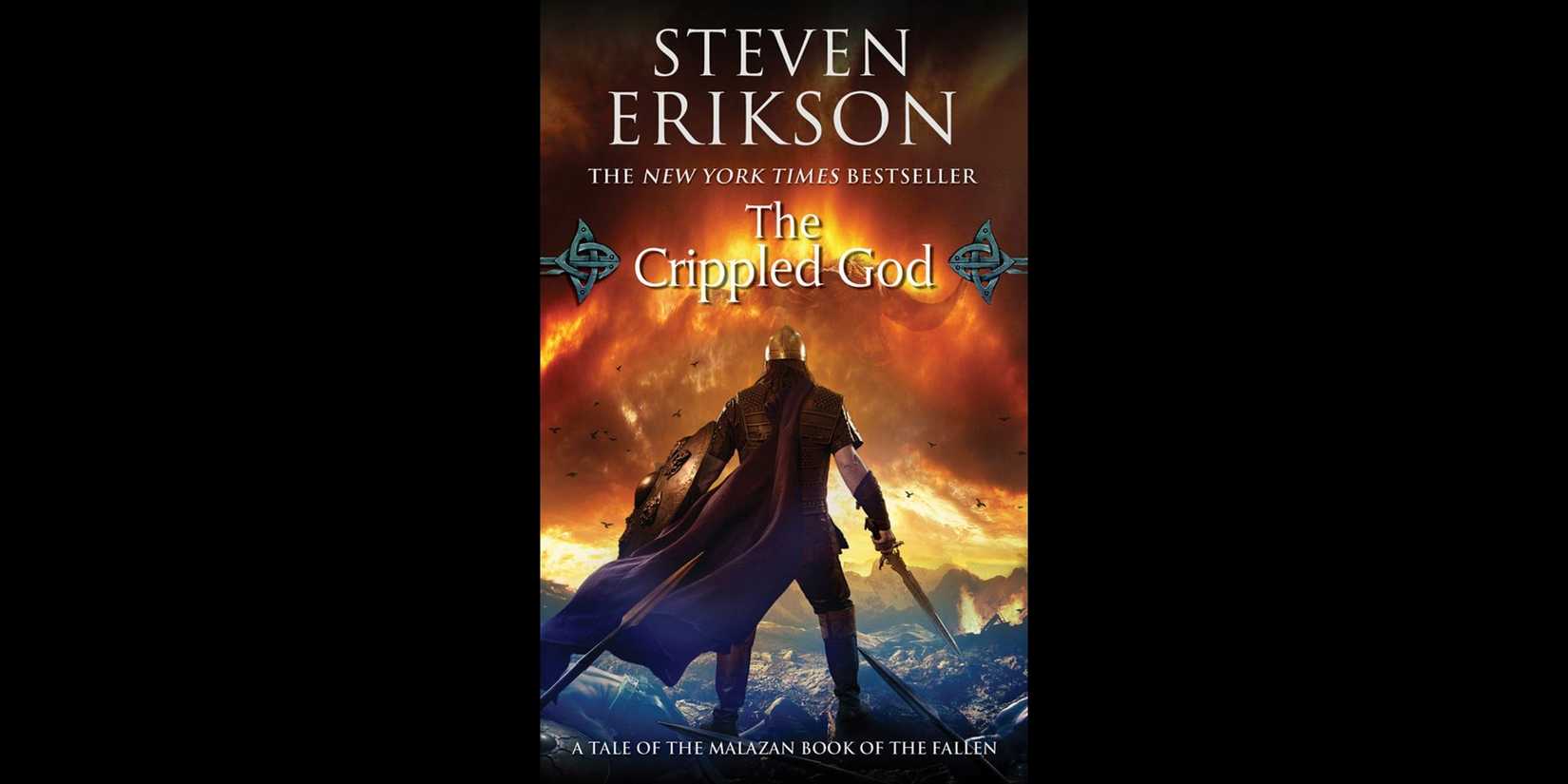 Image via Tor Fantasy
"We were never what people could be. We were only what we were. Remember us." The Malazan Book of the Fallen is arguably the most epic of all epic fantasy, unfolding across hundreds of storylines, literal millennia of history, and some 11,000 total pages. By the last book, The Crippled God, author Steven Erikson was juggling a mind-boggling number of characters and plotlines, yet he managed to bring them all to a graceful and coherent conclusion (something that these kinds of blockbuster fantasy series often botch).
The resulting book is brutal, exhausting, occasionally bewildering, and unexpectedly emotional, full of sound and fury, battles and sorcery, but also some genuinely touching, character-driven moments. In the end, a sprawling tale of warring empires and scheming gods becomes a statement on empathy and compassion. In other words, this finale delivers both hard-hitting action and weighty themes.
Realm of the Elderlings by Robin Hobb

"I have never been wise." Realm of the Elderlings is a super-saga by author Robin Hobb, consisting of five subseries totaling 16 novels. There were the Six Duchies books centered on FitzChivalry Farseer, and separate subseries following the Bingtown Traders and the Rain Wilds. The last book, Assassin's Fate, seamlessly merges these worlds, bringing together liveships, dragons, serpents, and characters from across the entire globe.
This could easily have collapsed into a total mess, but Hobb has the narrative skills to pull it off, and she clearly put a lot of care and thought into it. For instance, this book was published in 2017, and it contains payoffs to prophecies, background lore, and minor plot points that were seeded all the way back in 1995's Assassin's Apprentice. Hobb also succeeds in keeping Fitz and his character development front and center, even amidst all the other color and action.
Collider Exclusive · 8 Questions · 2 Minutes What Fantasy World Do You Belong To? Middle-earth · Grand Line · The Continent · Camp Half-Blood
Pick your magic, your crew, where you want to wake up and who you would rather be fighting, and we will tell you which world you actually belong in. Four are open to you: an ancient kingdom living through its last good age, an endless sea full of pirates, a continent that pays people to kill monsters, and a summer camp where the Greek gods are extremely real and mostly a nuisance.
💍Middle-earth(Rings of Power)
👒Grand Line(One Piece)
🐺The Continent(The Witcher)
🔱Camp Half-Blood(Percy Jackson)
FIND YOUR WORLD →
01
What kind of power do you want? Every one of these worlds runs on a completely different sort of magic.
ASomething ancient and half forgotten that came down through my family. BSomething completely ridiculous that works in a fight and gets a laugh. CNo magic at all, just training, potions and a very sharp sword. DSomething I inherited from a parent I have barely met.
NEXT QUESTION →
02
Who is travelling with you? Nobody gets through any of these stories entirely on their own.
AA fellowship drawn from every corner of the world who barely trust each other. BA crew I picked up one at a time, all of whom would die for me. CTwo or three people I would never describe out loud as friends. DTwo mates from school who are exactly as out of their depth as I am.
NEXT QUESTION →
03
Where do you want to wake up tomorrow? The best fantasy is usually just somewhere you would genuinely like to live.
AA high city of white stone with the sea somewhere far below. BA ship under sail, with an island ahead that nobody has mapped. CA rented room over a tavern, in a town I am leaving in the morning. DA cabin at a summer camp with everybody else already awake outside.
NEXT QUESTION →
04
How are you making a living out there? Even in fantasy somebody has to pay for the horse.
AI am not, because somebody far older than me decided this was my duty. BTreasure, and I am not always careful about whose it used to be. CI take contracts, since people will pay well for what they will not touch. DI am fifteen and this is all technically a school trip.
NEXT QUESTION →
05
There is something in the woods. What do you do about it? All four of these worlds keep something unpleasant out there in the dark.
ASend word to somebody who has seen this before, then hold the line. BWalk straight in, because it is interesting and possibly edible. CAsk what it has been eating and what the village is willing to pay. DWork out which myth it escaped from, then improvise very badly.
NEXT QUESTION →
06
Who is the villain of your story? The enemy tells you far more about a world than the hero ever does.
AAn ancient evil that has been patient for several thousand years. BA government that has spent a long time calling itself the good guys. CA man who turns out to be far worse than anything I hunt for money. DA god, or possibly my own family, and quite likely both at once.
NEXT QUESTION →
07
What do you actually believe in out there? Every world hands its heroes one rule and asks them to hold onto it.
ASome things are worth defending even when the odds are hopeless. BNobody gets to tell me where I can go or what I am allowed to want. CPick the lesser evil, and never pretend afterwards that it was not evil. DMy friends come before anything a prophecy has to say about it.
NEXT QUESTION →
08
A thousand years from now, how are you remembered? Eight questions in, this is the one that decides your world.
AIn a song, in a language hardly anybody still speaks. BAs the one who got there first and proved the whole thing was possible. CBarely, and mostly wrongly, in ballads I would absolutely hate. DOn a plaque at a camp, read by kids about to do the same thing.
REVEAL MY WORLD →
The Map Is Drawn Your World Is…
Four worlds and four completely different ideas of what a good life looks like. This is where you belong, what it would ask of you, and what you would get back in return.
Middle-earth
You belong somewhere old enough that the mountains have names and somebody can still tell you who gave them. Middle-earth is for people who think the right thing is worth doing even when it will not be finished in their lifetime.
- This is the only world on the list where doing good is understood as a very long defeat, fought anyway, by people who will never see how it ends.
- You are drawn to grandeur, to white cities and deep forges and the sense that almost everything you touch is older than your entire family line.
- The Rings of Power is set in the last good age before it all goes wrong, which gives every quiet scene in it a slightly unbearable weight.
- You would take the hard road, and you would take it on foot.
The Grand Line
You want the sea, a crew, and absolutely nobody telling you where you are allowed to go. The Grand Line is the world for people whose main ambition in life is finding out what is over there.
- One Piece has run for decades on one very simple engine, which is a group of people who each want something impossible and have decided to go and get it together.
- You collect people. Your ideal crew is a set of misfits who were each written off somewhere else before you turned up and offered them a better idea.
- The world is enormous and deliberately ridiculous, and the emotional gut punches land harder because of that rather than in spite of it.
- You would set sail knowing the map runs out, which is more or less the entire point of it.
The Continent
You would rather be feared and useful than liked and useless. The Continent is a world where the monsters are the straightforward part of the job and the people are where it all gets complicated.
- Witchers get paid to do what nobody else will and resented for existing at all, which is a trade most people would refuse and you would probably accept.
- You have no real illusions about which side is the good one, largely because on the Continent that question tends to have a disappointing answer.
- The best of these stories are not about the fighting. They are about somebody with a rigid code being repeatedly cornered into caring about people.
- You would take the coin, finish the job properly, and be out of town before the story got told wrong.
Camp Half-Blood
You want the myths to be real and loose in the actual world, and you want to find out at about thirteen that you were never anywhere near as ordinary as everybody kept telling you.
- Percy Jackson takes the oldest stories we have and drops them into car parks and diners, which makes the gods considerably funnier and a great deal worse.
- You would be the kid every school gave up on, who turns out to have been built for something nobody thought to test for.
- The series is genuinely about friendship rather than destiny, and it says so out loud every time a prophecy tries to get in the way.
- Camp Half-Blood is the real fantasy here: a place where the thing that made you difficult everywhere else is the thing that makes you belong.
↻ RETAKE THE QUIZ
The Dark Tower by Stephen King
 Image via Donald M. Grant, Publisher
"The man in black fled across the desert, and the gunslinger followed." This misguided movie adaptation mangled the series completely, but the original Dark Tower books are very much worth checking out. In many ways, it's Stephen King's magnum opus, a superstructure connecting many of his novels and short stories. By the last book (also titled The Dark Tower), our gunslinger Roland and his allies have crossed worlds, survived impossible enemies, and sacrificed almost everything in pursuit of their destination.
Here, King finally cashes in the emotional investment built around these characters, and the results can be merciless. Death and separation hang over the journey, as does Roland's obsession. How much can he sacrifice before reaching the Tower ceases to qualify as victory? Then comes the ending. It was divisive, to say the least, but it perfectly fits the themes that the series was always hinting at.
His Dark Materials by Philip Pullman
 Image via Yearling Books
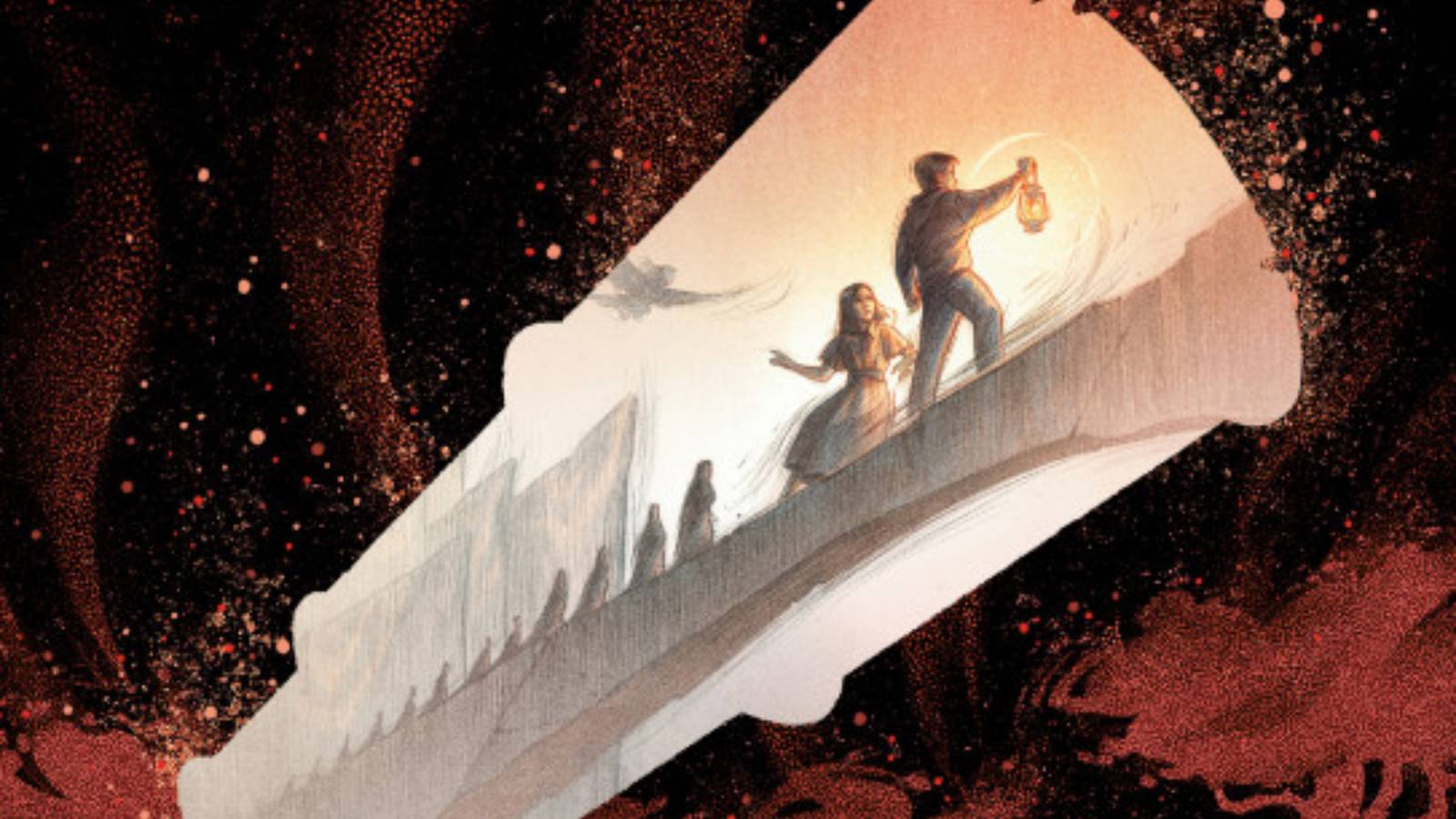
"I stopped believing there was a power of good and a power of evil that were outside us." His Dark Materials is one of the smartest and most philosophical fantasy series ever, as well as one of the most entertaining, and nowhere is that more on display than in The Amber Spyglass, the third entry in the trilogy. In it, Lyra Belacqua's childhood adventure has expanded into a conflict spanning multiple universes, and she and Will Parry must undertake a journey to the land of the dead.
The book's ambition is simply enormous. Angels, armored bears, dæmons, specters, witches, the mysterious Dust, and the knife capable of cutting between worlds all become pieces of a story concerned with consciousness, religion, freedom, mortality, and growing up. However, aside from the big ideas, there are simply beautiful, poignant scenes, like Will and Lyra's all-too-fleeting romance in the third act.
The Lord of the Rings by J.R.R. Tolkien
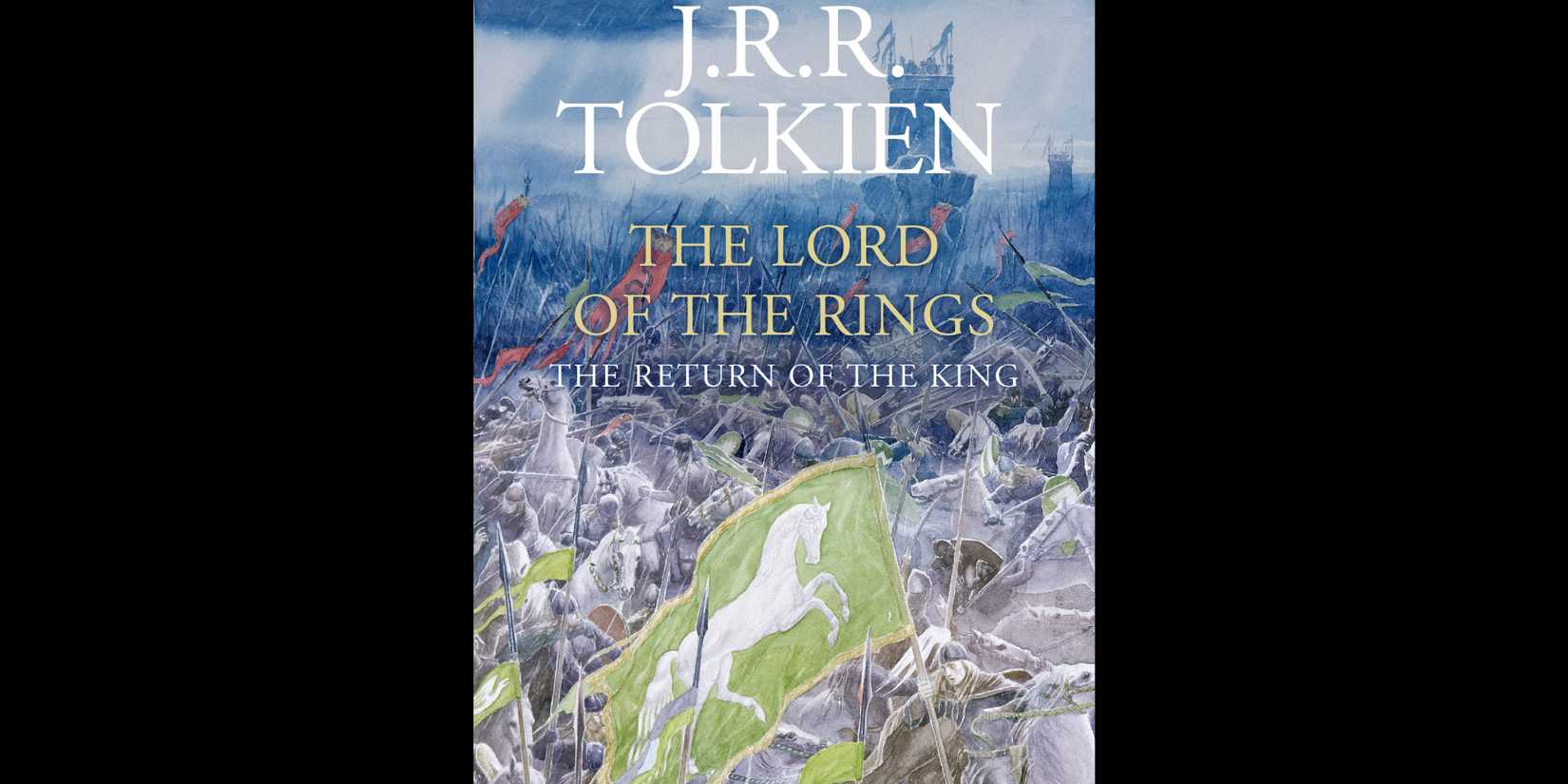 Image via HarperCollins
"Well, I'm back." Some readers will prefer the warmth of Fellowship, but The Return of the King is probably the grander and more well-rounded book. Indeed, it delivers on practically every front. The Battle of the Pelennor Fields delivers the military climax promised across the trilogy, Aragorn finally steps fully into the identity he's spent so long approaching, and Éowyn receives one of the saga's defining heroic moments.
At the eye of the storm are Frodo and Sam, whose journey through Mordor strips fantasy adventure down to exhaustion, hunger, loyalty, and the increasingly impossible task of putting one foot in front of another. Then, after armies have clashed, kingdoms have returned, the One Ring has been destroyed, and an age of Middle-earth has ended, J.R.R. Tolkien concludes it with Sam returning home. It's the perfect bookend, taking us back to where it all began: just a hobbit in the Shire.