Image via Arthur A. Levine Books/ Scholastic

Published Nov 1, 2026, 11:22 PM EST
At any given moment, Scott Simone has at least three books jockeying for his attention. He’ll never turn down a campus novel with a literary bent, nor will he hesitate to add yet another mystery to his Leaning Tower of Pisa-inspired to-be-read pile — which is built upon the bedrocks of too many short story collections, how-are-these-real true crime books, and classics waiting to be cracked open again. Topics that have him ripping through pages the fastest include closed-circle murders, unhappy professors, life-questioning philosophical deep dives, so long as they feature sharp sentences, a dark sense of humor, and at least a little malice.
He’s spent so much time in book shops over the years he is, to his wife’s chagrin, continuing to build a library that doesn’t quite respect the dimensions of the apartment meant to contain it.
Sign in to your Collider account
Let's look at what made Harry Potter such a global success: There was a certain magic to it. And no, we're not talking about the moving staircases and talking portraits. We're not even talking about the spells and the games of Quidditch. No, we're talking about the enchantment of the lived-in world it created for readers — the dreadful teachers, the petty rivalries, the friendships that occasionally fell apart over the stupidest things. It was a fantastical world, sure, but one grounded in a way that made it feel tangible to readers. One in which readers felt they were living.
Of course, Rowling was far from the first to accomplish such a literary feat. Fantasy's great writers had long been conjuring extraordinary worlds populated by remarkably ordinary people. They used the same familiar trappings — magic and potions, wizardry and enchanted forests — to explore everyday vanities, the corruption of power, and the ridiculous things people do for love. The best classic fantasy books have lost little of their ability to draw readers into their worlds, thanks to extraordinary prose and characters whose troubles become as engrossing as our own.
'Phantastes' (1858)
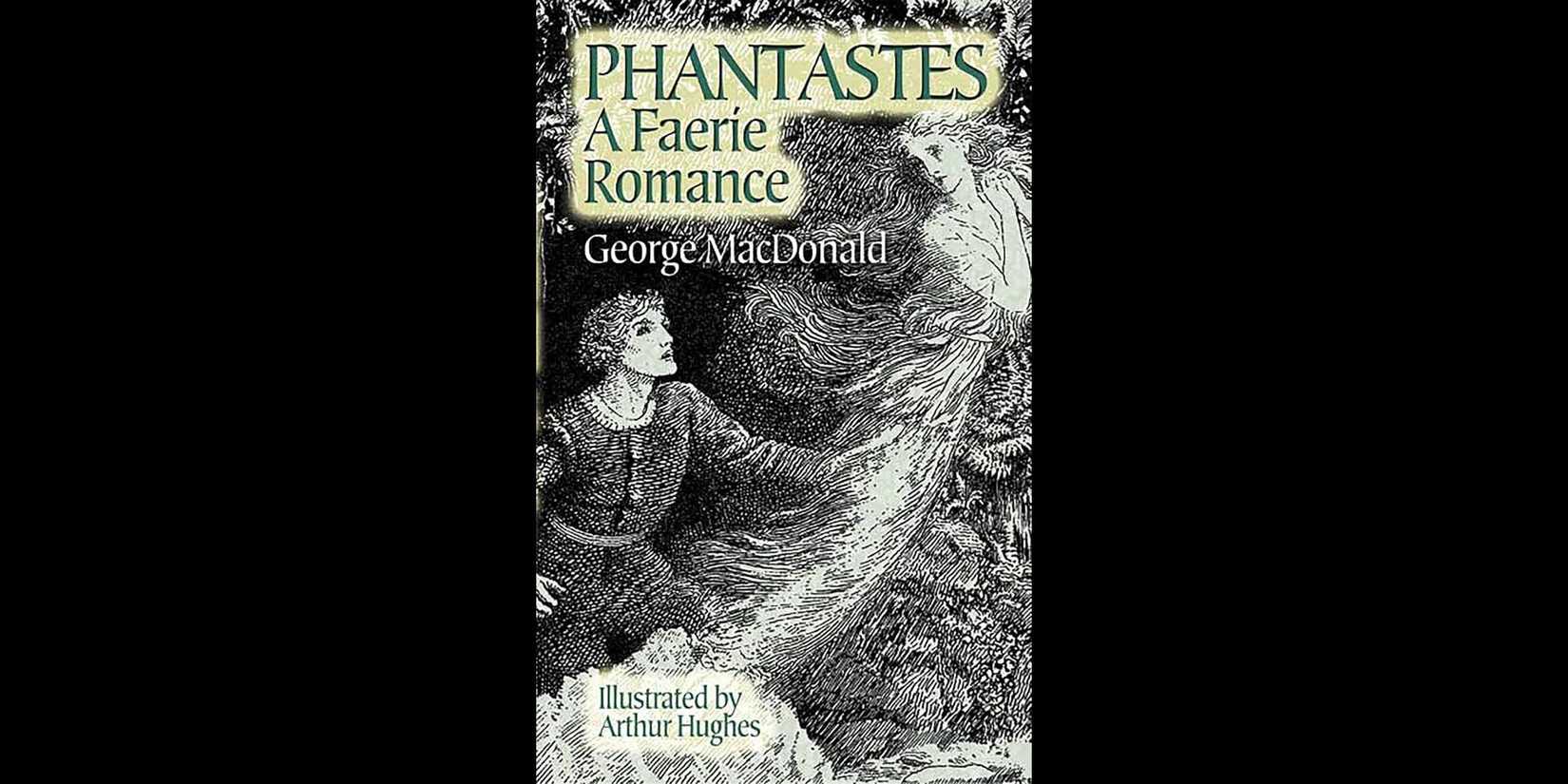 Image via Dover Publications
George MacDonald didn't just write a fantasy novel with Phantastes. He wrote what's more of a probing allegory on greed. But not the material kind. The protagonist, Anodos, comes to inhabit Fairy Land, a world of unrivaled beauty. However, he's not satisfied with simply admiring its wonders. He wants to possess the very things he claims to love. Take the time he sings a woman out of a marble statue, only to pursue her once she flees because he’s convinced freeing her entitles him to her affection.
As the book unfolds, MacDonald turns that greed into something more and more ruinous. Eventually, a shadow attaches itself to Anodos. This shadow ends up stripping the enchantment from whatever it touches, turning marvels into ordinary sights. And Anodos' endless quest for an ideal woman leaves him increasingly dissatisfied. The more Anodos wants to claim for himself, the less capable he becomes of appreciating anything. It's only when he acts selflessly that he understands what he's been missing all along.
'The King of Elfland's Daughter' (1924)
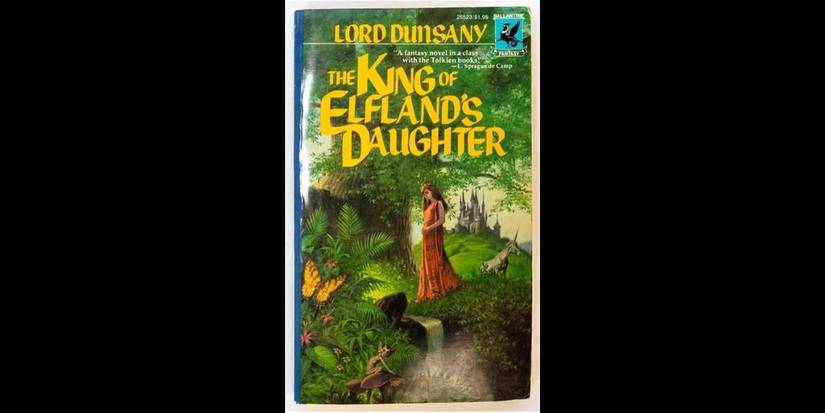 Image via Ballantine Books
Fairy tales ordinarily involve a happily ever after. But Lord Dunsany didn't settle for the ordinary fairy tale with The King of Elfland's Daughter, instead exploring whether a happily ever after has its costs. The citizens of Erl wish for a magical ruler. So Prince Alveric sets out to find one, returning with Lirazel, an elfin princess, in tow. The two marry, but it's not exactly picture-perfect, full of unmet expectations and growing complications. The elfin princess can't exactly adjust to living by mortal customs; Alveric can't understand her idealization of the timeless world she left behind. There's love there, but neither is happy in the other's world.
The couple separates, something Dunsany intensifies with his treatment of time in the novel. Centuries barely register in Elfland. But in Erl, people age and children grow — entire lives are lived and passed. And Dunsany's lyrical prose lingers over the changing seasons, giving the ordinary passage of time an almost magical quality. While the lovers do eventually reunite, it comes at the expense of the very world in which their story began.
'Lolly Willowes' (1926)
 Image via New York Review Books Classics
Sure, Harry Potter's relatives made no secret of how little they wanted him around. But Sylvia Townsend Warner took to dismantling the fable of familial cruelty with an even sharper edge. With Lolly Willowes, she explores how a family dependent on you isn't one that necessarily loves you. Laura moves into her brother's house after their father's death. The family thinks itself generous simply for taking her in and quickly comes to depend on her. Her wants and wishes be damned.
So Laura decides to move to the countryside. She's not seeking to strike out on some grand adventure; she simply wants to spend her days however she pleases. But her nephew Titus follows, threatening to turn her newfound independence into another family obligation. That's exactly when Warner introduces a bit of witchcraft. It's the Devil, wouldn't you know it, who ends up being more respectful of Laura's desires than her own family. It's in that way that Warner indicts the so-called respectable society Laura escaped: To live on her own terms, she must first become everything a respectable woman shouldn't be.
COLLIDERInteractive
The Hat awaits
Movies/Wizarding World/The Sorting
C
Collider · The Sorting Hat Awaits
Which Hogwarts House
Are You?
Eight questions · four houses · one sorting
Four houses, one destiny. The Sorting Hat has weighed thousands of students and now it is your turn. Answer honestly and find out where you belong at Hogwarts School of Witchcraft and Wizardry. The four houses
Gryffindor
Slytherin
Hufflepuff
Ravenclaw
Place the hat
Question 1 of 8VALUES
01 What quality do you value most in yourself? Answer as honestly as you can. The Hat always knows.
ACourage. I act even when I am afraid, because what is right matters more than what is safe. BAmbition. I know what I want and I have the drive and the cunning to reach it. CLoyalty. I show up for the people I love, whatever it costs me. DWisdom. I think before I act and I am always hungry to understand more.
← Back Keys 1 to 4 or A to D · Enter to advance
Next question
Question 2 of 8CONFLICT
02 A friend is being treated unfairly. What do you do? How you protect other people says everything about you.
AStep in at once and confront whoever is responsible. I will not stand by. BWork out the best strategy to deal with it. A smart move beats a rash one. CStay at their side, support them, and help them through it however they need. DWork out what is really going on and find the most reasoned, fair solution.
← Back Keys 1 to 4 or A to D · Enter to advance
Next question
Question 3 of 8AMBITION
03 What does success look like to you? What you are working toward is what you are becoming.
ABeing remembered as someone who fought for what was right, whatever the odds. BReaching the goals I set for myself: influence, standing, and respect I earned. CA life where the people I care about know I was there for them, always. DMastering my field, contributing something that lasts, and never stopping learning.
← Back Keys 1 to 4 or A to D · Enter to advance
Next question
Question 4 of 8FEAR
04 What is your greatest fear? Fear is the most honest thing about a person.
ABeing a coward when it counted, and looking back knowing I did nothing. BMediocrity. Fading into obscurity without leaving a mark on the world. CLosing the people I love, or letting them down when they needed me most. DIgnorance. Being wrong and not knowing it, or never reaching what I could be.
← Back Keys 1 to 4 or A to D · Enter to advance
Next question
Question 5 of 8MORALITY
05 The rules say no. Your gut says go. What do you do? Every institution has rules. What you do with them is a choice.
ABreak them. If it is the right thing to do, no rule should stop me. BFind a way to get what I want without being caught. Rules are guidelines. CProbably follow them, though I would find a way to help inside them if I could. DThink it through carefully. Is the rule unjust, or is my gut just impatient?
← Back Keys 1 to 4 or A to D · Enter to advance
Next question
Question 6 of 8FRIENDSHIP
06 What kind of friend are you? Who you are to the people you love is who you really are.
AThe protector. I will go to the ends of the earth for the people I care about. BThe strategist. I give sharp advice and I am the one who works out how to fix it. CThe constant. I am always there, always reliable, and I never make it about me. DThe guide. I help people think it through and see what they have missed.
← Back Keys 1 to 4 or A to D · Enter to advance
Next question
Question 7 of 8THE MIRROR
07 You look into the Mirror of Erised. What do you see? The mirror shows the deepest desire of your heart.
AYourself standing victorious, having faced the greatest challenge and won. BYourself at the height of your power: respected, successful and in control. CYourself surrounded by everyone you love, whole and happy and together. DYourself with every answer: every book read, every mystery solved.
← Back Keys 1 to 4 or A to D · Enter to advance
Next question
Question 8 of 8THE SORTING
08 The Hat pauses. It whispers: you could do well in any house. But what matters most to you, truly? This is the tiebreaker. The Hat always listens.
ABravery. I want to be the kind of person who acts when others will not. BGreatness. I want to leave my mark and be more than ordinary. CBelonging. I want to be part of something good and never let my people down. DUnderstanding. I want to know the truth of things and keep growing forever.
← Back Keys 1 to 4 or A to D · Enter to advance
Reveal my house
The Sorting Hat speaksYour house has been chosen
Gryffindor Gryffindor Tower · Scarlet and Gold Gryffindors do not act because they are fearless. They act because some things are worth being afraid for.
You have nerve. Not the reckless kind, but the deep and quiet sort that turns up even when you are terrified, and especially then. You stand up for people when looking away would be easier, and you go at what is right even when the odds are poor. That instinct has cost you before and you have never once decided it was not worth it. Why the Hat chose this
- You speak up in the room where it costs you something.
- You would rather be wrong and brave than right and silent.
- People come to you when something needs facing.
From the Collider file
- Dominic McLaughlin takes over as Harry in HBO's series, which arrives in 2027 after filming through 2025 and 2026.
- Daniel Radcliffe, Rupert Grint and Emma Watson were all cast in 2000, aged eleven, ten and ten.
- The Sorting Hat on screen was a practical puppet before any digital work went near it.
Nerve Acts first Stands up
Slytherin Slytherin Dungeon · Emerald and Silver At its best this is the house of people who refuse the limits other people set for them.
You are driven, sharp, and entirely clear-eyed about what you want and how to reach it. Slytherin has been misread for a long time, painted as the house of villains when what it really rewards is resourcefulness and the patience to play a long game. You know your own worth, you protect your own fiercely, and you have never needed anyone else's permission to aim high. Why the Hat chose this
- You think three moves ahead and say one of them out loud.
- You are loyal to a small circle and ruthless about the rest.
- Being underestimated has always suited you.
From the Collider file
- Alan Rickman knew Snape's ending from Rowling years before the films got there, and played it accordingly.
- Tom Felton read for Harry and for Ron before landing Draco.
- Paapa Essiedu takes the role of Snape in HBO's series.
Plays the long game Knows his worth Resourceful
Hufflepuff Hufflepuff Basement · Yellow and Black Not the safe house and not the leftover house. The house with the most heart.
You are the sort of person who makes a place better just by being in it. You turn up, you do the work, and you do not need glory or credit for any of it, because you do what is right on the grounds that it is right. Your loyalty does not waver when it is tested, which is the only time loyalty means anything at all. Hufflepuff has never been the consolation prize. Why the Hat chose this
- You are the one who remembers, and who follows through.
- You do the unglamorous part nobody volunteers for.
- Your word has never needed a backup.
From the Collider file
- Robert Pattinson played Cedric Diggory in Goblet of Fire a year before he was cast in Twilight.
- Eddie Redmayne's Newt Scamander put a Hufflepuff at the center of five Fantastic Beasts films.
- The common room sits beside the kitchens, which is the most Hufflepuff detail in the books.
Shows up Unwavering No credit needed
Ravenclaw Ravenclaw Tower · Blue and Bronze Not merely intelligence. The love of learning, and the rare nerve to say you do not know yet.
Your mind is your best thing and you have always known it. Ravenclaws are the questioners, the ones who cannot leave a puzzle alone and who find a good book better company than most rooms full of people. What marks the house out is not being clever, it is wanting to understand, and being willing to admit the gap. You see things with a clarity that other people find unsettling. Why the Hat chose this
- You would rather be corrected than comfortable.
- You notice the thing nobody else in the room noticed.
- You have never been able to leave a question alone.
From the Collider file
- Evanna Lynch was cast as Luna from an open call of roughly fifteen thousand girls, having written to Rowling as a fan.
- The tower door asks a riddle rather than a password, so a Ravenclaw can be locked out by thinking too slowly.
- Luna, Flitwick and Rowena Ravenclaw are all originals, which is rather the point of the house.
Asks the question Loves learning Sees clearly
The Hat's deliberation · your top three
1
2
3
Sorted byCOLLIDERCollider.com · The Fandom Desk
'Titus Groan' (1946)
 Image via The Overlook Press
Mervyn Peake makes the case that power has an enduring ability to corrupt in Titus Groan. He argues that it can trap those who inherit it and tempt those who desperately yearn for it. This story of corruption takes place in Gormenghast, an enormous, labyrinthine castle. It's a place in which centuries-old rituals dictate pretty much every facet of life. However, Earl Sepulchrave could not be bothered by the pomp and prefers burrowing himself in the confines of his library. His sisters turn bitter, resenting the influence their family name has failed to bring them. Everything is governed by rank in this fantastical society, but there is no one who's satisfied by their place within it.
That's especially true for Steerpike, a kitchen boy with no title or fortune. He does, though, possess an insatiable appetite for power. He feeds the sisters' hunger for recognition, persuading them to burn the Earl's library. It's an act that also gives him the opportunity to emerge as the hero. Peake makes Steerpike's ingenuity almost admirable, only to expose how ruthlessly he puts it to work.
'The Lord of the Rings' (1954–1955)
 Image via HarperCollins
Here's the thing about The Lord of the Rings: Yes, it's lauded for its warriors and its kings and enormous battles. But the story truly hinges on something a lot less heroic — an act of mercy. J. R. R. Tolkien writes Gollum with all the qualities that would lead to distrust. He's deceitful, and he's obsessive. He's even willing to betray anyone to reclaim his precious Ring. Frodo, even Frodo, initially questions why Bilbo spared the creature's life. Yet, Gandalf insists that Gollum deserves pity; Frodo, too, comes to share that belief.
It's that decision — to show compassion for someone seemingly wholly undeserving — that has larger repercussions than any outcome on the battlefield. Because after Frodo carries the Ring across Middle-earth to reach Mount Doom, he ultimately can’t bring himself to destroy it. And so he claims it instead, and Gollum ultimately brings about the Ring's destruction. Tolkien allows his hero to fail at the very moment he's supposed to triumph, showing that all the courage in Middle-earth couldn't accomplish what a few seemingly foolish acts of mercy ultimately did.
'The Once and Future King' (1958)
 Image via Collins
Many a fantasy novel about knights centers on the notion of chivalry. But T.H. White offers a much less romantic version of chivalry in The Once and Future King. The book questions whether violence committed in the name of a noble cause is ever really virtuous. Sure, the knights within the novel speak of honor and justice. When it comes down to it, they're men who simply enjoy fighting. Arthur's magical tutor, Merlyn, decides to teach the young Arthur a lesson: he turns him into a fish. It’s then he comes face-to-face with a giant pike, who's convinced that strength gives him the right to devour anyone weaker. Arthur sets up the Round Table, thinking he can challenge that same thinking and convince his knights to use their strength to protect others and not to terrorize them.
However, White shows how difficult it is to change a society's perception of violence when its most celebrated figures have built their identities around it. What ends up happening is that Arthur's knights grow restless; his attempts to turn their ambitions toward spiritual pursuits are all but disastrous. He turns to law rather than force, but Mordred exploits those same laws and uses them against him. Ultimately, White strips the glamour from Camelot, and in doing so, shows just how easily noble ideals can become excuses for cruelty.
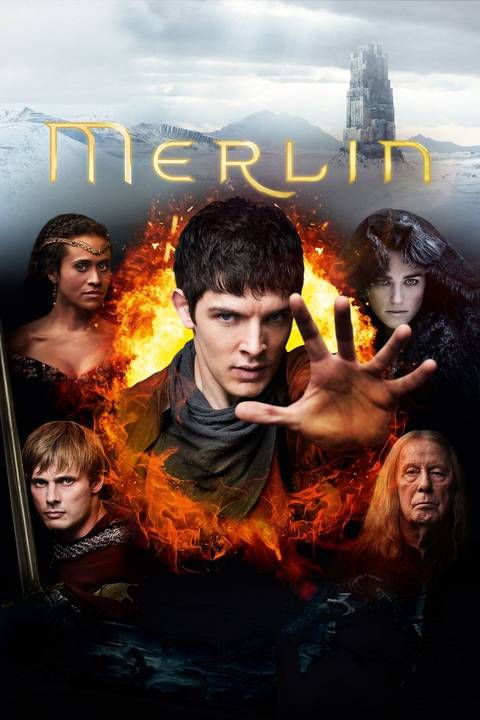
Merlin
Release Date 2008 - 2012-00-00
Network BBC One