Even the greatest anime usually have an episode or two that fans are tempted to skip during a rewatch. A select few, however, never let up. Every chapter advances the story, reveals something meaningful about its characters, or delivers an unforgettable display of animation.
The best anime balance compelling storytelling, striking visuals, and genuine thematic depth, but very few sustain that combination from beginning to end. Universally acclaimed series like Cowboy Bebop and Fullmetal Alchemist: Brotherhood set an intimidating standard with their complex characters, carefully constructed worlds, and coherent themes. But plenty of less obvious choices come remarkably close to perfection.
Subjective taste inevitably plays a role here. A contemplative series like Mushi-shi and a sprawling space opera like Legend of the Galactic Heroes offer radically different versions of great storytelling. For this list, we’re focusing on anime that combine distinctive animation with narrative ambition, embrace complicated characters, and avoid wasting their limited time. These five anime prove that when every episode matters, even a short series can feel monumental.
5 Monster
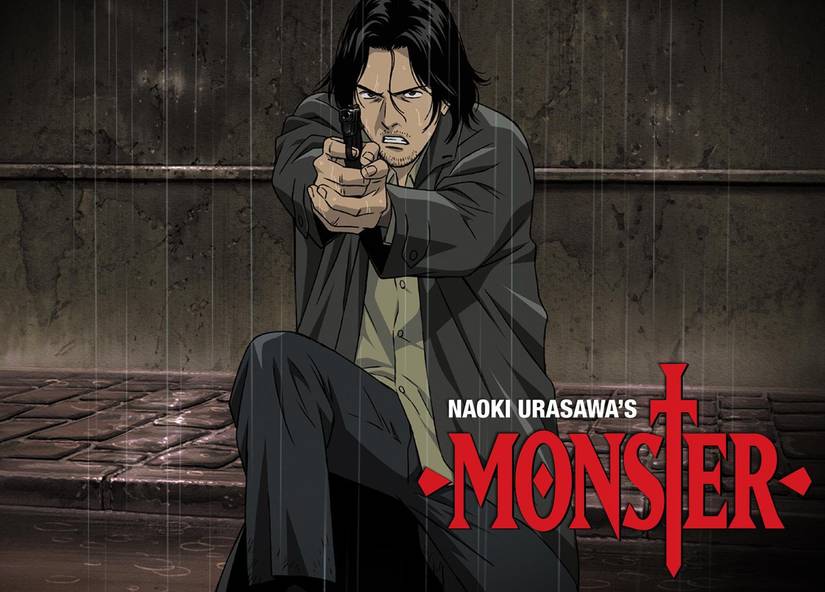 Image: Madhouse
The term “masterpiece” gets thrown around too easily, but it feels appropriate for Naoki Urasawa’s Monster. Madhouse’s 74-episode adaptation patiently unravels the manga’s philosophical mysteries without sacrificing the tension of its central game of cat and mouse.
The story begins with Dr. Kenzo Tenma, a gifted neurosurgeon working in West Germany who defies his superiors to save a young boy named Johan Liebert instead of operating on an influential politician. Tenma’s decision costs him his professional standing, but he remains convinced that saving Johan was the morally correct choice. Years later, he discovers that the child whose life he saved has grown into a terrifyingly manipulative serial killer.
That revelation transforms Monster into an agonizing moral dilemma: What responsibility does Tenma bear for the evil Johan commits, and can a doctor devoted to preserving life bring himself to kill his former patient? The series remains remarkably faithful to Urasawa’s tightly constructed narrative, while its restrained animation captures the story’s oppressive, post-Cold War atmosphere.
The real strength of Monster lies in how widely its mystery reaches. Seemingly minor characters receive complete emotional lives, and encounters that initially resemble detours often become essential pieces of the larger puzzle. Its morality is never comfortably binary. Every choice carries consequences, every person is capable of transformation, and every episode deepens the question at the story’s center: Are all human lives truly equal?
4 FLCL (OVA)
FLCL eventually expanded into a five-season franchise, with several follow-ups produced through collaborations involving Production I.G, Adult Swim, and other studios. But the original six-episode OVA, released between 2000 and 2001, remains pure, concentrated magic.
The series follows Naota Nandaba, a sullen 12-year-old whose aggressively ordinary suburban life is shattered by the arrival of Haruko Haruhara, an alien woman who runs him over with a Vespa and then hits him with a bass guitar. Soon, robots and weapons begin emerging from a portal inside Naota’s head, while Haruko recruits him into her conflict with the sinister Medical Mechanica.
That premise barely communicates what watching FLCL actually feels like. The series barrels through visual styles, pop-culture references, fourth-wall breaks, and delirious action sequences with the manic confidence of animators determined to try everything at once. The music of Japanese rock band the Pillows gives that chaos a wistful emotional rhythm.
Underneath the mayhem, FLCL is an unconventional coming-of-age story about the confusing performance of adulthood. Naota wants to appear mature, partly because he lives in the shadow of his older brother, but he has no idea what maturity actually means. His embarrassment, jealousy, attraction, and resentment become literal monsters bursting out of his skull. At only six episodes, FLCL has no time for conventional filler. Every bizarre stylistic experiment becomes part of its portrait of adolescence: overwhelming, humiliating, exhilarating, and over before you have fully understood it.
3 Steins;Gate
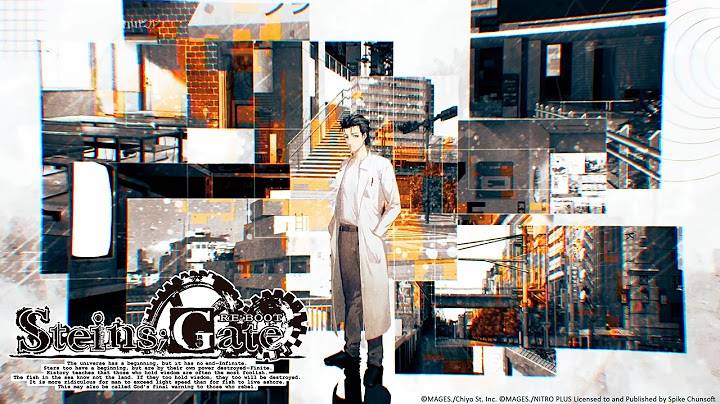 Image: Mages/Spike Chunsoft
Steins;Gate is based on an acclaimed visual novel, but its anime adaptation makes masterful use of 24 episodes to tell a thrilling and psychologically rich story about time travel and its consequences.
Set in Akihabara in 2010, the series follows Rintaro Okabe, a self-proclaimed mad scientist who performs under the grandiose alias Hououin Kyouma. After attending a conference about time travel, Okabe and his friends discover that their makeshift “PhoneWave” can send text messages into the past. Each message alters history, pushing Okabe into a different “world line” while leaving him as the only person who fully remembers the previous reality.
The early episodes lean heavily into quirky comedy and slice-of-life routines. That measured pace is essential rather than expendable. Steins;Gate first invites us to enjoy spending time with Okabe and his friends, making their cramped laboratory feel like a place worth preserving. Only then does it reveal the devastating cost of manipulating time.
As the consequences accumulate, Okabe becomes trapped beneath the burden of memories no one else shares. Each attempt to correct history demands another sacrifice, turning what began as a playful scientific discovery into a brutal test of endurance. The show’s hard science-fiction vocabulary gives structure to its time-travel mechanics, but its real power is emotional. Steins;Gate works because its increasingly complicated timelines remain anchored to a painfully simple desire: Okabe wants to save the people he loves, even when the universe seems determined to make him choose between them.
2 The Tatami Galaxy
 Madhouse
Masaaki Yuasa’s The Tatami Galaxy became the first television series to win the Japan Media Arts Festival’s Grand Prize for animation, and it is easy to understand why. Across 11 relentlessly inventive episodes, the anime uses rapid-fire dialogue, elastic character animation, and dramatic shifts in color and perspective to capture the anxieties of youth.
The story follows an unnamed third-year student at Kyoto University who is consumed by regret. Convinced that he squandered his college years by joining the wrong campus club, he imagines the different “rose-colored” life he might have enjoyed had he made another choice. Each episode places him in a new version of his university experience, where he joins a different organization and pursues another supposed path to happiness.
No matter what he chooses, however, familiar people and frustrations reappear. The mischievous Ozu inevitably complicates his life, the mysterious Akashi remains just beyond his reach, and the protagonist once again concludes that he selected the wrong path. The repetition gradually reveals the flaw in his thinking: His misery does not come from choosing the wrong club. It comes from his refusal to value the life directly in front of him.
Part of becoming an adult is recognizing that perfection is a myth and that meaning is created through imperfect choices. The Tatami Galaxy arrives at that truth by dramatizing the indecision that keeps people chained to fantasy. Its looping structure never feels like empty repetition because each episode reframes the same relationships and regrets from a new angle. By the time those parallel possibilities finally converge, the result is deeply cathartic. The perfect life was never waiting in another reality. It was hiding inside the one the protagonist had already lived.
1 Paranoia Agent
Another one-season wonder, Satoshi Kon’s Paranoia Agent explores the ways private fear can evolve into collective hysteria.
The story begins with Tsukiko Sagi, a shy character designer who achieved unexpected success by creating Maromi, an adorable pink dog mascot. Under mounting pressure to invent an equally popular follow-up, Tsukiko is attacked by a mysterious boy on inline skates wielding a bent golden baseball bat. The police are skeptical of her story, but similar attacks soon spread across Tokyo. The assailant becomes known as Lil’ Slugger, and his victims can offer little useful information about who — or what — he really is.
Kon’s lifelong fascination with the unstable border between dreams and reality is on full display throughout Paranoia Agent. What begins as a police procedural gradually splinters into an anthology-like portrait of people buckling under social pressure. Each new victim is trapped by a different crisis, and Lil’ Slugger seems to arrive precisely when escape feels impossible.
That structure ensures that even the show’s strangest episodes contribute to its larger argument. Paranoia Agent is about urban isolation, professional anxiety, escapism, and the seductive power of a convenient lie. Once fear spreads through a community, it no longer belongs to any single person; it takes on a new identity with every rumor, victim, and retelling. Kon turns that psychological idea into a surreal urban nightmare, one in which fantasy can offer temporary relief but cannot erase reality forever.