 Image via Paramount Pictures

Published Nov 4, 2026, 7:08 AM EST
Liam Gaughan is a film and TV writer at Collider. He has been writing film reviews and news coverage for ten years. Between relentlessly adding new titles to his watchlist and attending as many screenings as he can, Liam is always watching new movies and television shows.
In addition to reviewing, writing, and commentating on both new and old releases, Liam has interviewed talent such as Mark Wahlberg, Jesse Plemons, Sam Mendes, Billy Eichner, Dylan O'Brien, Luke Wilson, and B.J. Novak. Liam aims to get his spec scripts produced and currently writes short films and stage plays. He lives in Allentown, PA.
When the cast of the original Star Trek series made the leap to the big screen, they did so after the beloved show, which ran for only three seasons, was off the air for over a decade. This left a lot of untapped potential to explore new stories, especially since the characters were now older and more reflective. Star Trek: The Next Generation was a much more successful series that ran for seven seasons and thoroughly explored a multitude of social, political, and philosophical issues, which gave each member of the cast room to shine. Although the result was an excellent series, because of this, there was more pressure on the films to perform and feel like more than just extended episodes.
The fact that there was such a short turnaround between the end of the show and the first film (only a few months passed between the final episode of Star Trek: The Next Generation and the premiere of Star Trek Generations) meant that there wasn’t the same period of maturation that had been given to the original cast, either. But of the four films starring the cast of The Next Generation, Star Trek: First Contact stands out as a uniquely action-packed, scary, and emotional installment that brought out the best in the great Patrick Stewart as Captain Jean-Luc Picard.
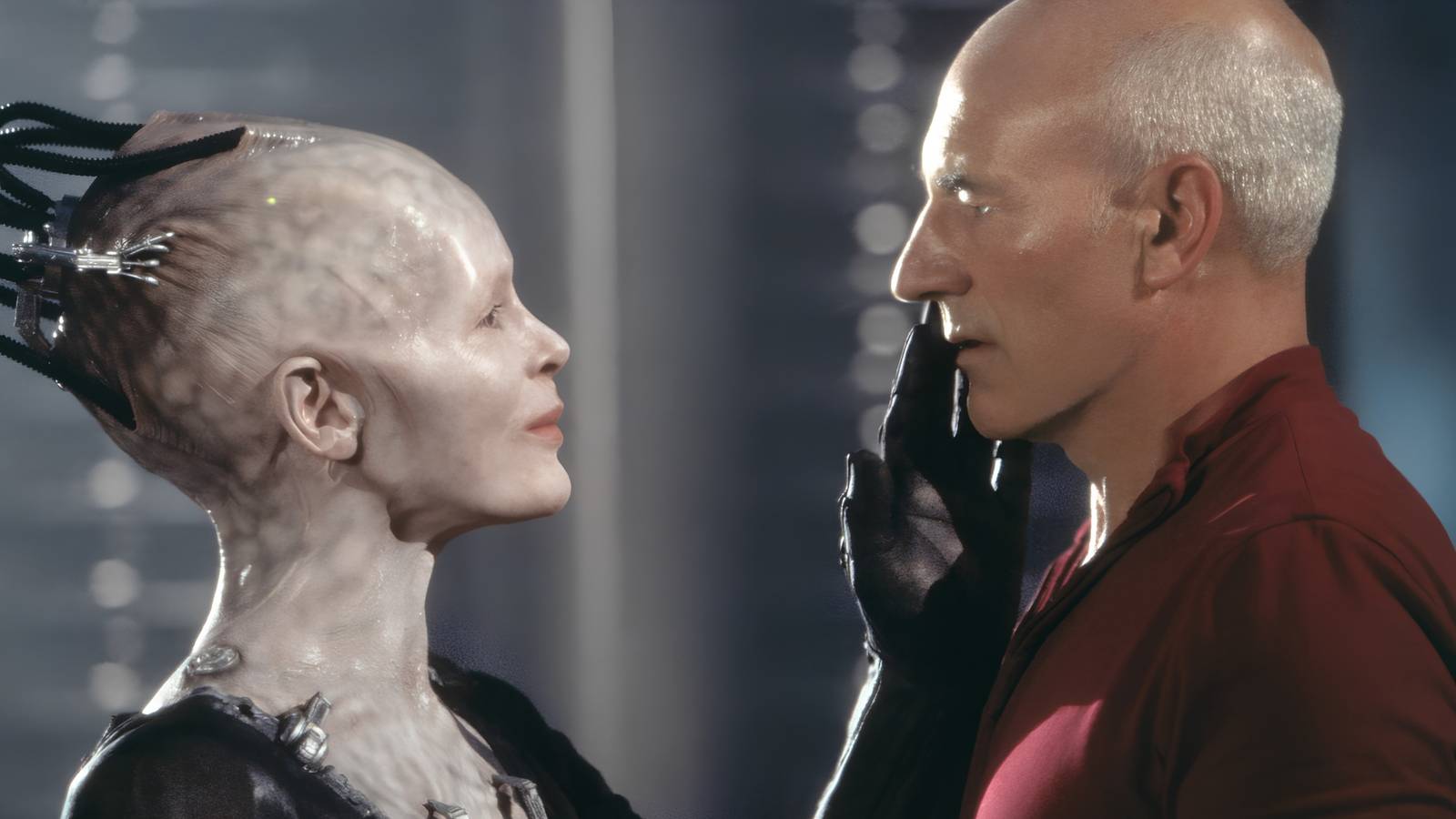
The first The Next Generation film suffered from unnecessary nostalgia for the original series and an uninvolving storyline that was derivative of the show. But there was a conscious effort to make First Contact a more cinematic entry that did things that wouldn’t be possible on a television budget. Star Trek II: The Wrath of Khan is agreed-upon to be the greatest entry in the franchise, and part of the film’s genius was bringing in a fan-favorite villain from the show to come back with a vengeance. First Contact made the bold decision to feature the Borg, the most terrifying of all Star Trek villains, as the main antagonist, who threatened the characters by taking hold of the Enterprise and separating the crew. It’s in this instance that Picard is forced to move beyond the bridge and take part in the action; it is essentially “Die Hard on the Enterprise,” and Picard is John McClane.
Although The Next Generation was cutting-edge for its time in delivering consistently high-quality storytelling (at least from its third season on), First Contact was allowed to be more intense and took full advantage of its PG-13 rating. The Borg Collective is transformed into a legitimately scary threat that takes over Enterprise crew members, and the Oscar-nominated makeup effects added a presence of body horror. First Contact was easily the most action-packed installment in the series thus far, but there is a psychological component to the depiction of Picard that made it register on a deeper level. Picard has suffered from extreme post-traumatic stress disorder based on his time as a prisoner of the Borg, and is still coping with feelings of guilt for the inadvertent harm that he caused to Starfleet while under its control. Stewart shows a vulnerable side to Picard that makes the performance more emotional, especially since the character is taken out of comfort zone and placed in the middle of the action.
The appeal of Die Hard as the ultimate action film is in the perfect setup of a lone hero having to fight against the odds while in a confined location, and First Contact puts Picard alone on the Enterprise while a segment of his crew is on a mission to Earth. It’s the most fleshed-out that the interior of the Enterprise had been in a Star Trek film up until this point, and First Contact explored Picard’s vast knowledge of the vessel through his use of the Holodeck to escape the Borg soldiers. Although Stewart turns into a compelling action star, Picard’s humanist qualities have always been what makes him a great character, and First Contact puts him in a compelling position as he finds a new ally in Lily Sloane (Alfre Woodard), an inventor from Earth’s past who is stranded on the ship after its occupation. It’s through Lily that Picard understands that he will only gain victory if he gives up his personal pride, even though he is resolute to not let the Enterprise fall into enemy hands.
‘Star Trek: First Contact’ Is Patrick Stewart at His Best
The Star Trek films obviously had to create a slightly broader version of the characters that ensured that they would resonate with viewers who hadn’t watched the show, but Stewart masterfully creates a new spin on Picard that retains the essence of the role. Picard is slightly more brash, quippy, and friendly with the crew than he was in the series, but that is a sign of his development; The Next Generation finale “All Good Things” had shown Picard finally playing cards with the crew for the first time, signifying that he had learned to live among them in a more casual way.
First Contact is a truly unique installment in the series that contains both dizzying zero-gravity action scenes and thought-provoking philosophy about the eventuality of a core timeline, but Stewart shows true passion for the role of Picard, giving the type of hefty monologues that were appropriate for an actor with such experience on the stage. First Contact is a fulfilling chapter for those who had poured over every episode of The Next Generation, but it’s also a terrific introduction to Picard and the entire crew of the Enterprise-E for those wanting to know what the hype is all about.

Star Trek: First Contact
Release Date November 22, 1996
Runtime 111 minutes
-

Commander William T. Riker
-

-

Lieutenant Commander Data
-

Lieutenant Commander Geordi La Forge