
.jpg) 16 hours ago
4
16 hours ago
4
Celebrating its 160th anniversary, Zenith honours the legacy of its El Primero and its core competency in chronometric precision.
For the true watch enthusiast, the story of Zenith is not merely a timeline of calibres and case shapes; it is a narrative of audacity and continuity. Well, it is a story of calibres and watches but it has a meaning that speaks directly to the reason people collect watches.
As the Manufacture in Le Locle celebrates its 160th anniversary in 2025, we look back at a legacy defined by a single, upward gaze — the same gaze that inspired a young visionary to name his company after the highest point in the night sky. Not his own name, but an ideal or goal.
One evening, struck by the complexity of the cosmos, he saw his mechanics as a mirror of the celestial order, adopting the name Zenith and the five-pointed star as his symbol. But we are getting ahead of ourselves because Favre-Jacot was not just a starry-eyed dreamer but a practical industrial wizard.
The story begins in 1865, in the frosty Jura mountains. While the Swiss watchmaking industry relied on a fragmented system of établissage – where scattered artisans made individual parts – 22-year-old Georges Favre-Jacot dreamt of unity. He constructed the first true manufacture in history, bringing every discipline of watchmaking under one roof in Le Locle. His goal was not just efficiency, but the creation of the “perfect watch.” In its heyday, the manufacture sparked a change in how Swiss watchmaking organised itself.
This foundational decision to integrate all skills, what we call vertical integration today, is what allowed Zenith to become the “Master of Chronometry.” By the mid-20th century, the brand had amassed an unbeaten record of 2,333 chronometry prizes, a testament to an obsession with precision that remains the brand’s heartbeat today.
Savior in the Attic
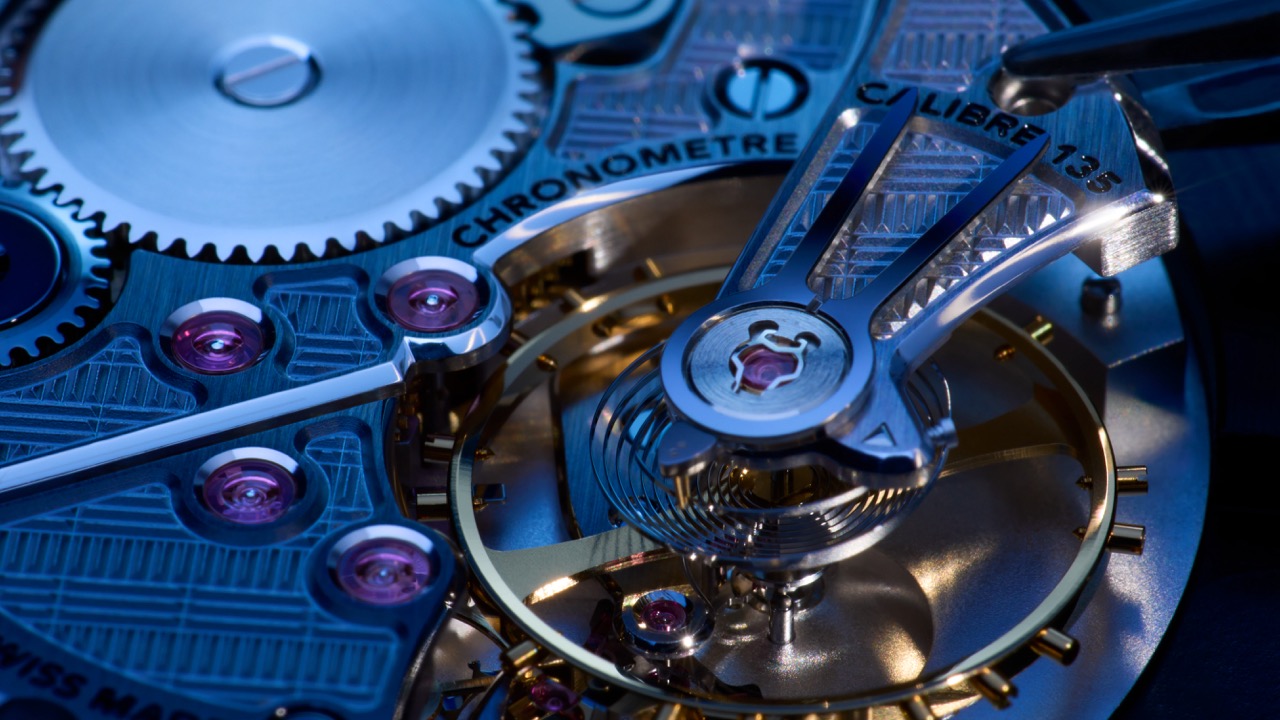
Of course, no story about Swiss watchmaking is complete without healthy servings of drama. Zenith’s story of triumphs is accompanied by turns towards disaster. Thus, no enthusiast’s retelling of Zenith is complete without the legend of Charles Vermot.
When the Quartz Crisis threatened to erase mechanical watchmaking in the 1970s, it was Vermot, a humble chronograph specialist, who defied orders to scrap the tooling for the legendary El Primero. He secretly hid the presses and plans in the manufacture’s attic.
Vermot’s act of rebellion saved the world’s first high-frequency automatic chronograph—launched in 1969 and beating at 36,000 vph or 5 Hz – ensuring that Zenith’s mechanical heart would beat on. Today, that heart still beats and has established Zenith as a maker of properly iconic chronographs.
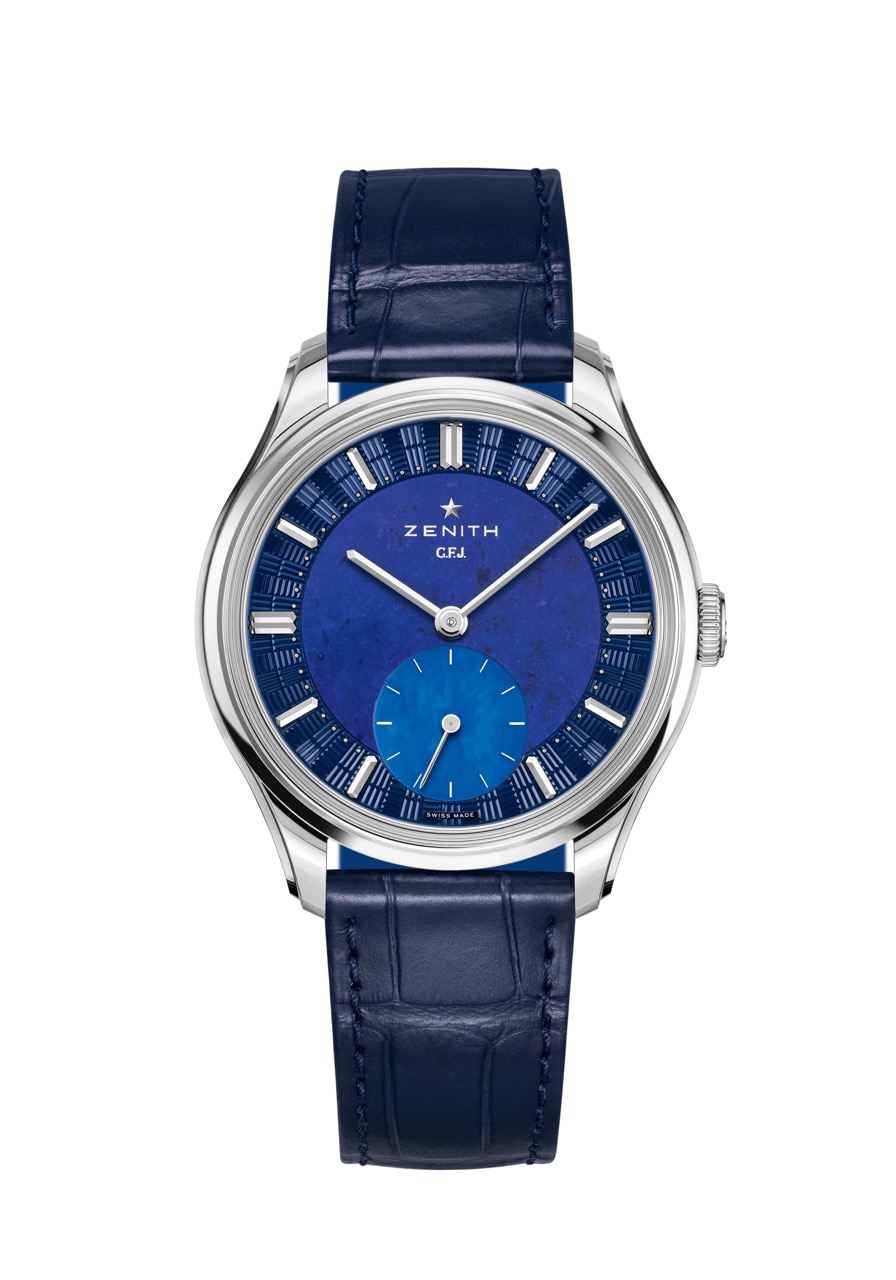
The El Primero has also evolved to beat faster than ever, becoming the El Primero 9004. This movement is capable of measuring 1/100th of a second, with a second escapement dedicated to the chronograph that beats at the phenomenal rate of 360,000 vph or 50 Hz.
Thus, Zenith’s 160th anniversary is not just a celebration of survival, but of simultaneous continuity and revival. It is why the manufacture not only began in Le Locle, it stayed there and remains there today. It was the biggest in the canton of Neuchatel and remains an impressive complex of 18 buildings. It is hard to imagine today but most of Swiss watchmaking is no longer where it began, marking Zenith as truly unusual.
Swept along by the ebb and flow of time, watchmaking’s industrial centres devolved into something resembling the supplier network of the établissage, only to be forced into consolidation by the Quartz Crisis, then to fragment again. It is now once more on the crest of a wave of vertical integration. For its part, Zenith remained anchored in Le Locle, from the difficult times all through to the renaissance of traditional watchmaking in early 21st century.
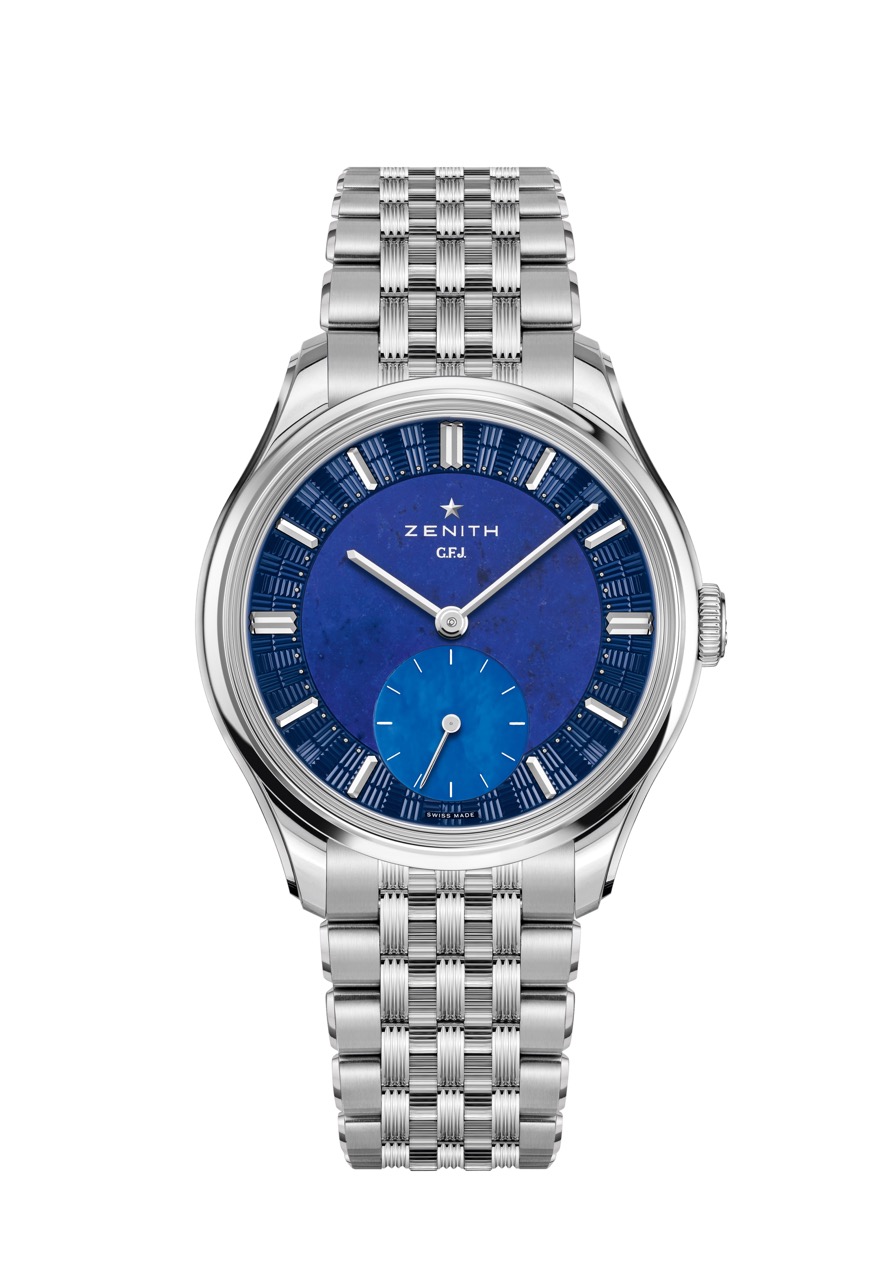
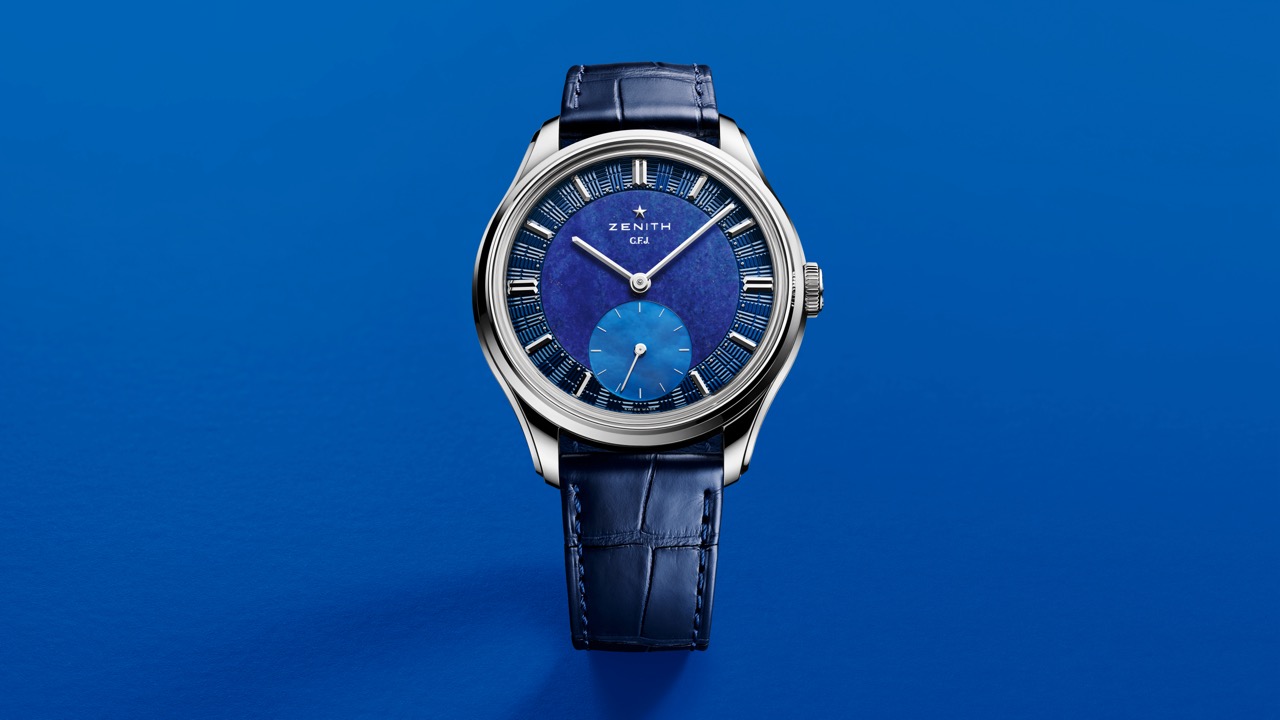
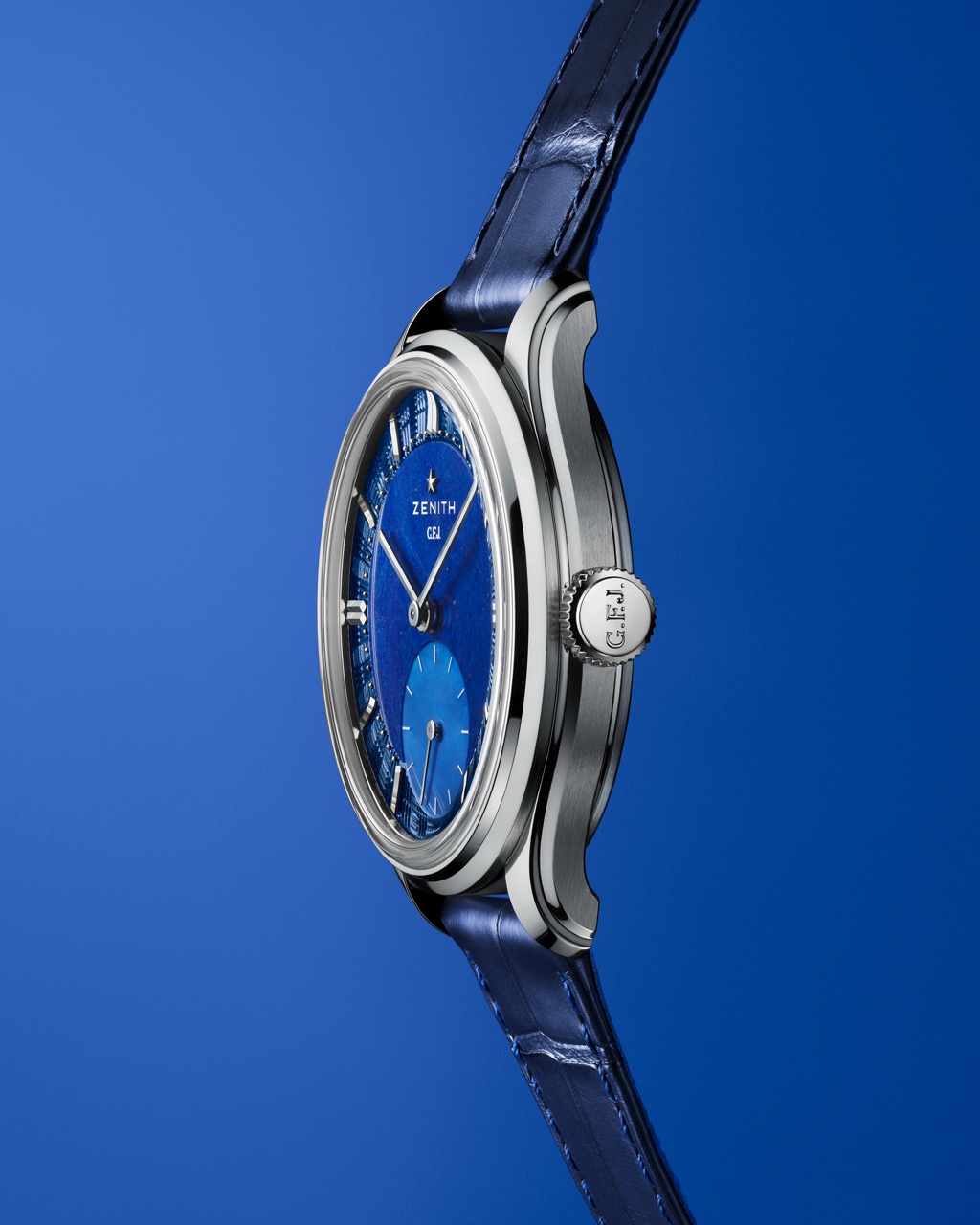
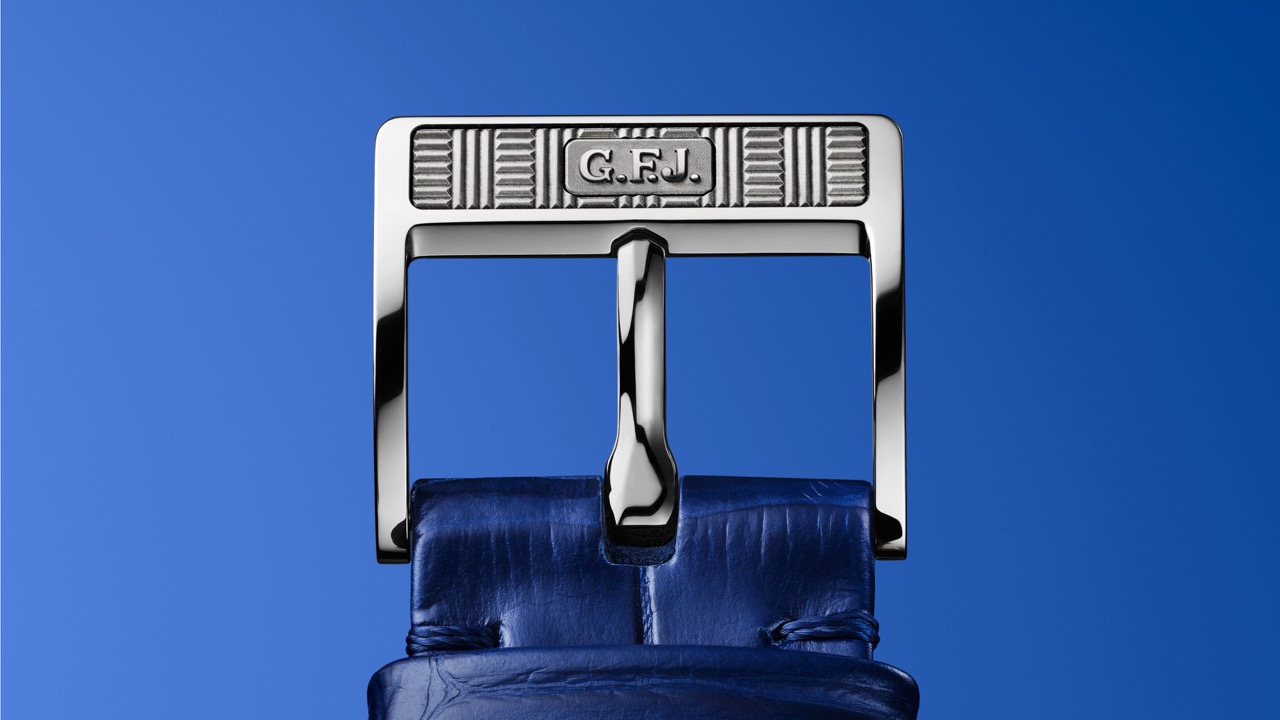
In 2025, Zenith created a physical manifestation of its unyielding bridge between past and present in the form of the G.F.J. watch. A tribute to its founder, the watch might yet be a beacon on that bridge, lighting the way forward towards a hopeful future.
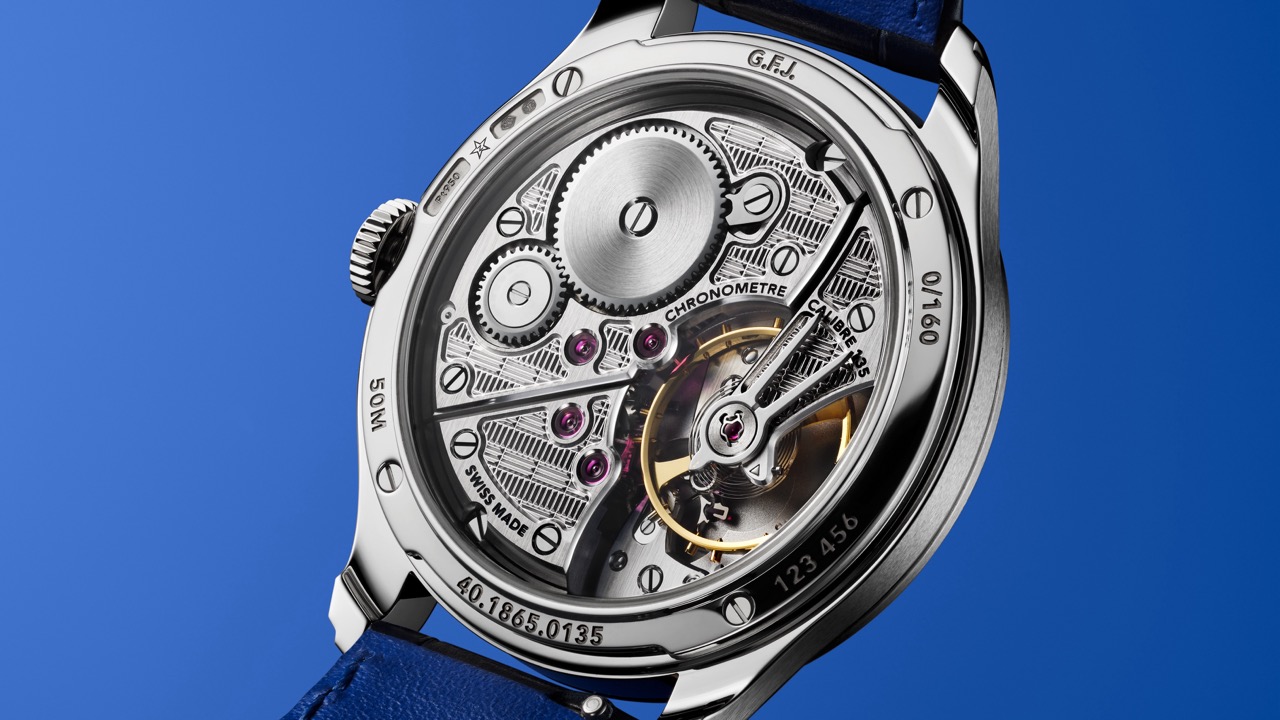
Powered by a modern re-engineering of the famed Calibre 135 – the most awarded movement in the golden age of observatory competitions – this platinum masterpiece recently won the Chronometry Prize at the 2025 Grand Prix d’Horlogerie de Genève (GPHG). With a dial of deep lapis lazuli and a “brick” guilloché motif mimicking the manufacture’s façade, it serves as a tangible link between the 1950s chronometry battles and contemporary haute horlogerie.
From the attic of the manufacture to the podium of the GPHG, Zenith proves that its story is still being written. It is a story of those who do not just measure time, but dare to reach for the star that guides them.
The Defy Extreme Lapis Lazuli
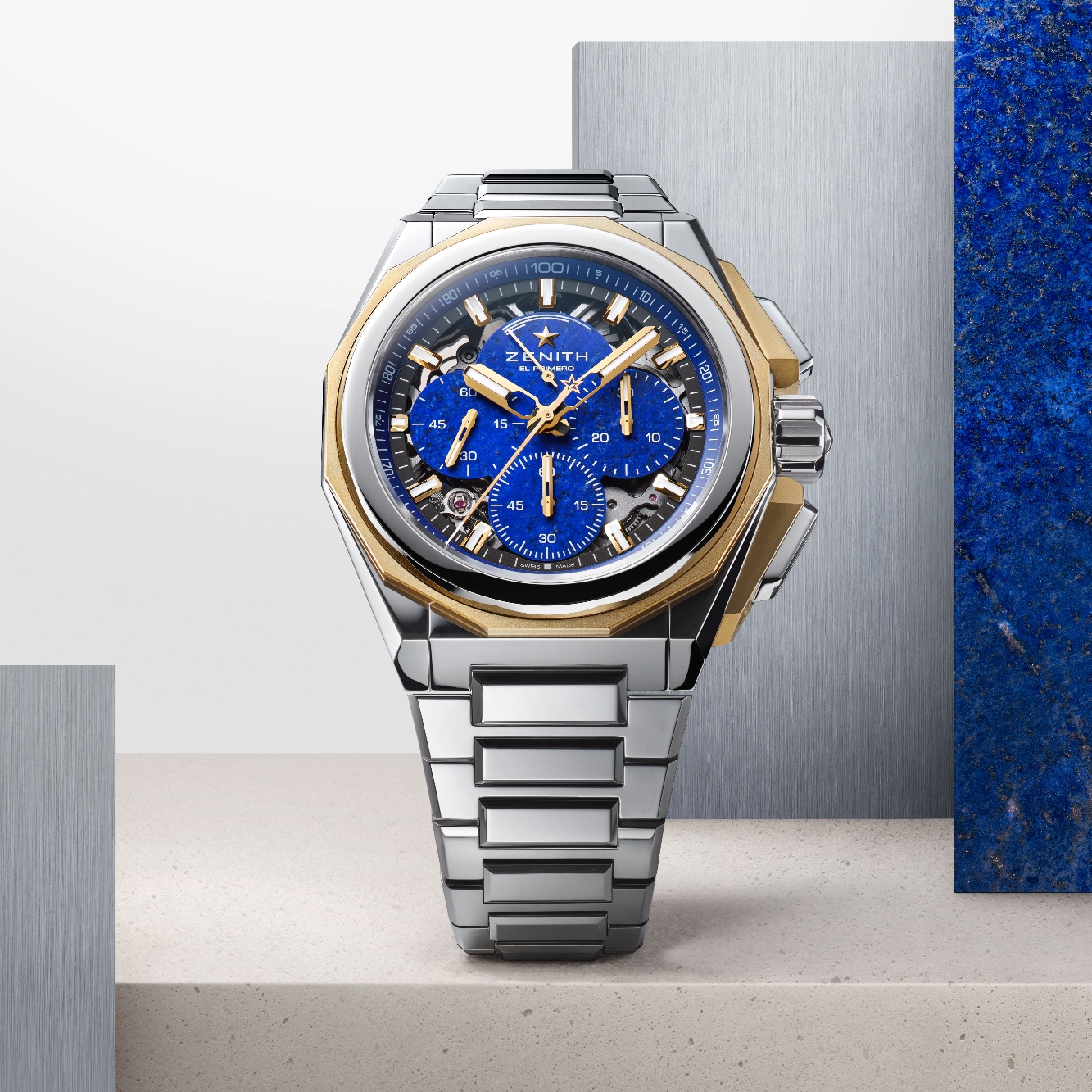
Precision That Radiates in Blue
If the G.F.J. represents the classical past, the Defy Extreme Lapis Lazuli embodies the radical future. Released as part of the 160th-anniversary celebrations, this limited edition of 50 pieces is a high-frequency wristwatch that fuses the brand’s celestial inspiration with brutalist architecture.
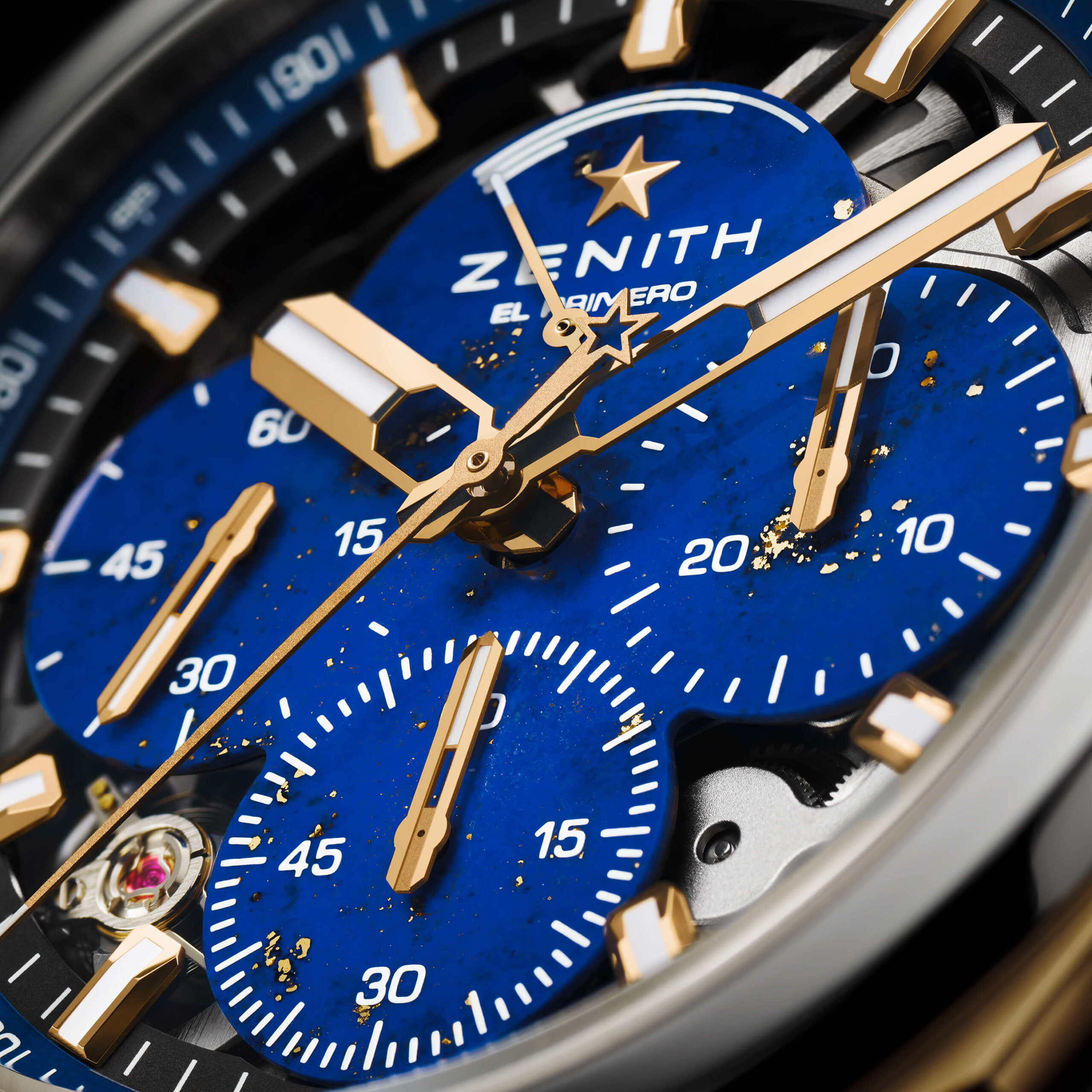
- The Dial: A slice of the cosmos. The openworked dial features counters crafted from lapis lazuli, a stone chosen for its deep celestial blue and natural pyrite inclusions that shimmer like distant stars. No two dials are alike.
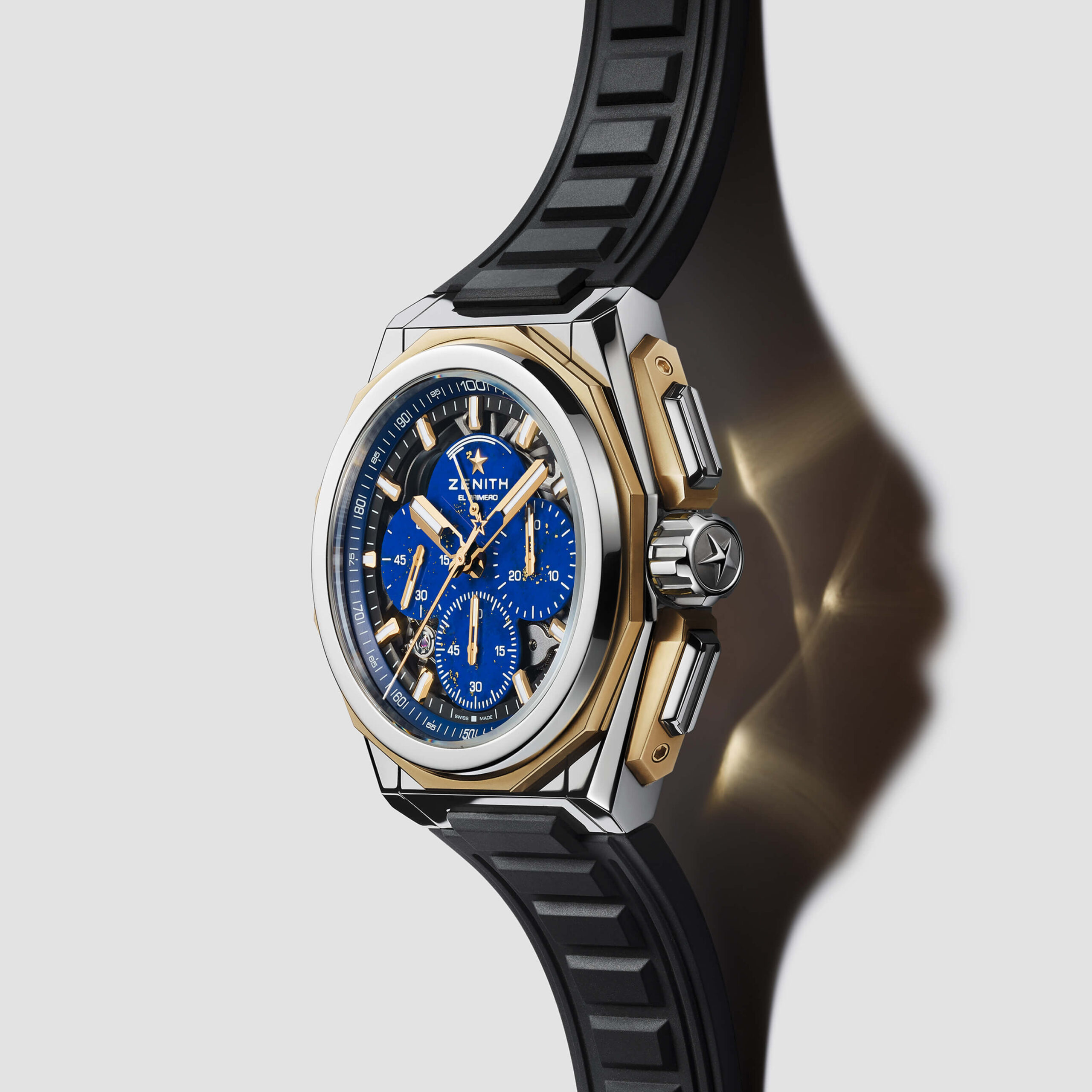
- The Engine: The El Primero 9004 calibre. It features two independent escapements: one beating at 5Hz (36,000 vph) for the time, and a second beating at a staggering 50Hz (360,000 vph) for the chronograph. This allows the central hand to make a full rotation every second, carving time into 1/100th of a second slices.
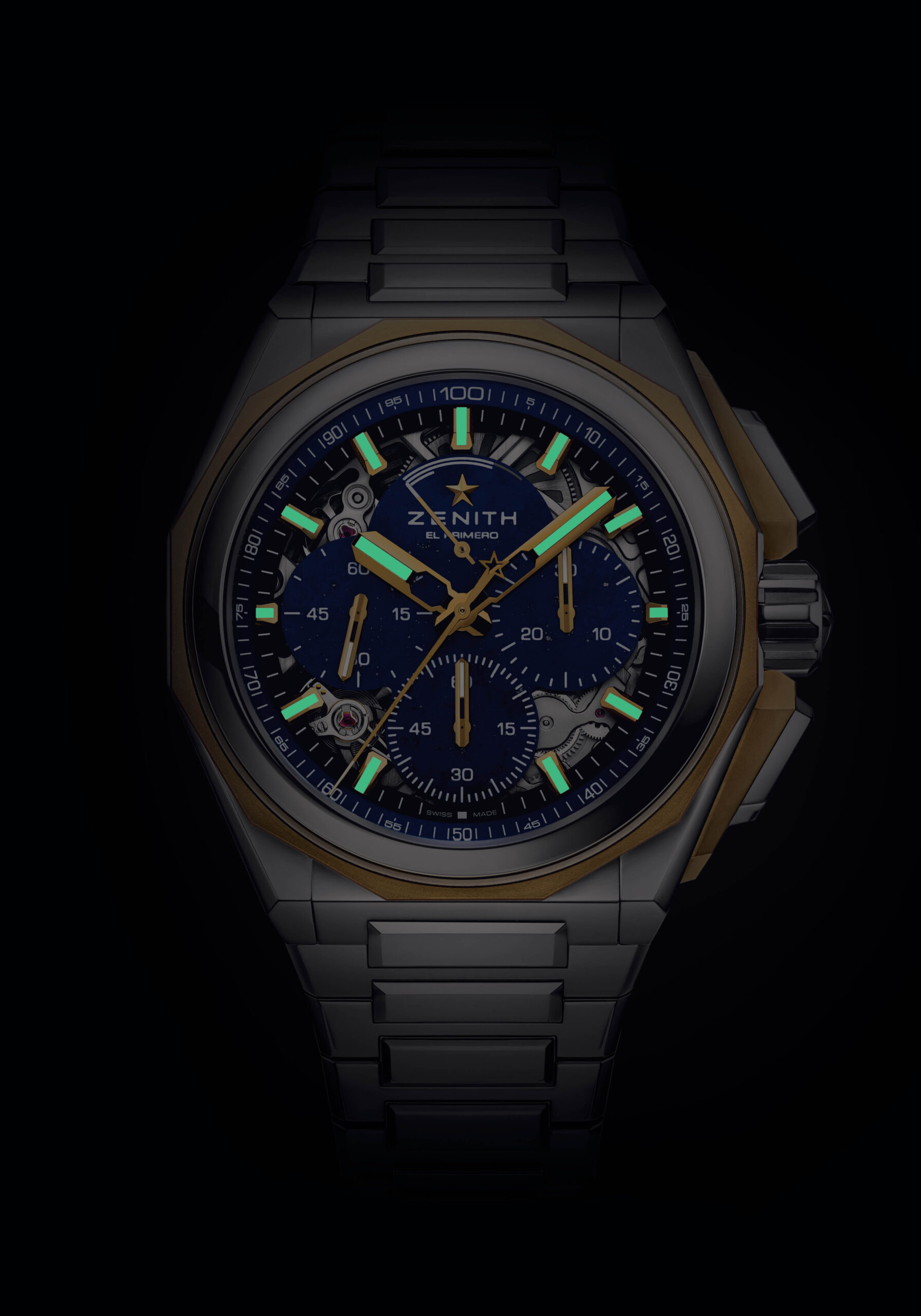
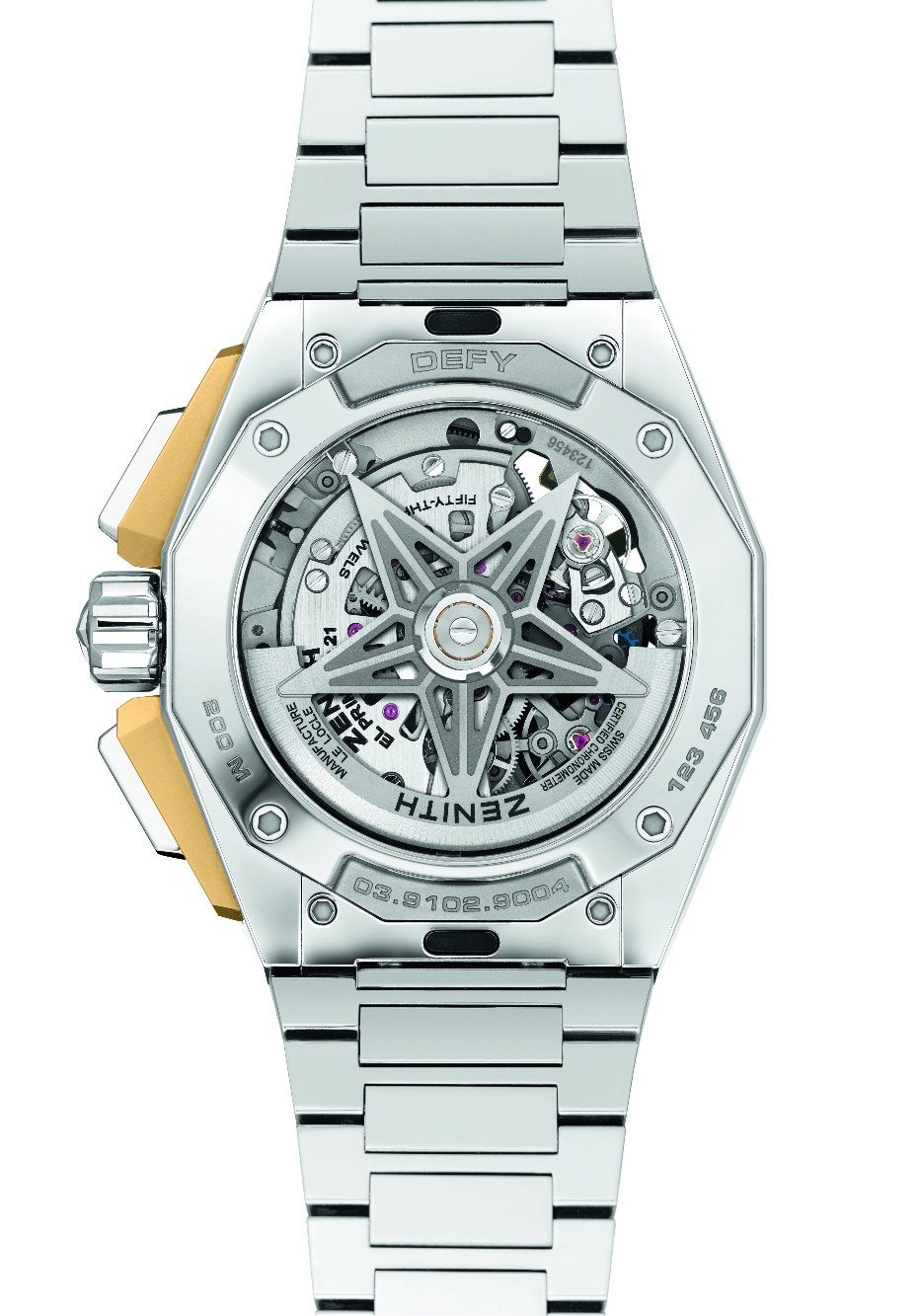
- The Armour: A 45mm case of polished stainless steel contrasted with a microblasted yellow gold dodecagonal bezel and pusher protectors, creating a warm, matte radiance. That bezel itself is a two-piece wonder, with the top half in stainless steel.
Like many contemporary Zenith creations, the strap for the Defy Extreme Lapis Lazuli is effortlessly interchangeable. There are three options here, all included: a steel bracelet; a black embossed rubber strap with folding clasp; and a black Velcro strap.
Limitation: 50 pieces
Price: 32,900 CHF
For more information, head to Zenith’s official website here.
For more on the latest in luxury watch reads, click here.
 English (US)