 Image via Tor Books

Published Nov 21, 2026, 12:36 PM EST
Sign in to your Collider account
Worldbuilding is the process by which a storyteller creates their world and details its history and inner workings. It's something that is most common in works of genre fiction across any medium, but it's one of the most important aspects of any fantasy story, as the genre lends itself to made-up worlds that are completely separate from our own. Thus, worldbuilding must be done from scratch, and cannot build upon what already exists on Earth.
While it is a crucial process and a big piece of the puzzle that makes a story good, many authors of fantasy have gone above and beyond the call of duty in this regard. These are the best fantasy novels with the most extensive worldbuilding. Some have written histories so meticulous and lengthy, or created such intricate worlds that their stories only feel like a tiny drop in the ocean.
'The Last Wish' (1993)
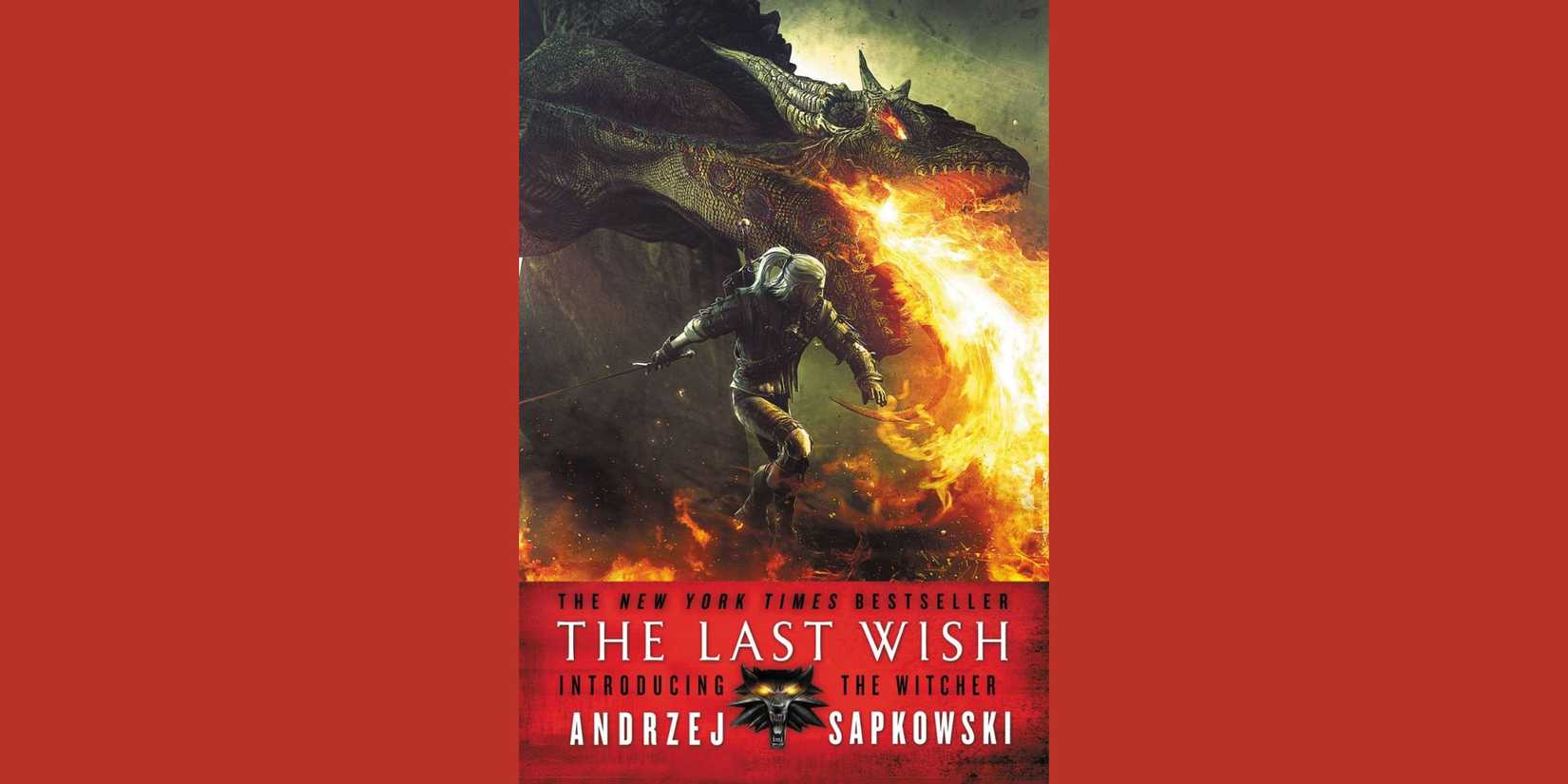 Image via Orbit
The Last Wish is the first short story collection in The Witcher saga, which is set on a planet called Earth, just not the same one we currently live on. The thing about this Earth is that it has a more fascinating history and many more life forms than we are used to. Granted, most of these life forms are dangerously hostile, which is probably why Witchers need to exist in the first place.
There is truly no end to the immense compendium of monsters present in the world of The Witcher, with each short story focusing on a new one. Many of them are original creations, but most are ripped straight from various mythologies and folklore from the real world. In just this first book, readers watch Geralt of Rivia face off against the Striga from Slavic folklore, as well as a djinn from Islamic tradition. It's a really dark, but incredibly interesting world that wastes no time hooking the reader.
'Assassin's Apprentice' (1995)
 Image via Del Rey
Assassin's Apprentice is just the first book in the Realm of the Elderlings saga, which consists of a few different trilogies, plus one tetralogy. The series often tells different stories but remains connected in several ways. With no supplementary works to complement the world, this series has to work extra hard to establish an immersive world, yet it does this to marvellous effect.
Not only is there a lot of lore behind the main events, but the world feels highly interconnected, with empires rising and falling, and even minor characters having some role to play in the shaping of the political landscape. Wars break out, treaties are signed, and the world grows more and more vast with every installment. The series may be done now, but it has long been discussed in online circles as a perfect piece of worldbuilding.
'The Colour of Magic' (1983)
 Image via Colin Smythe
The Discworld series is sort of a parody of classic high fantasy tropes that were becoming extremely popular in the 1980s. The saga is known for being one of the longest-running fantasy series of all time, with over 40 installments. Discworld is unabashedly ridiculous, starting as a flat planet sitting on the backs of four giant elephants, which ride on the back of a gigantic sea turtle flying through space. That's the kind of absurdism and hilarity that readers get to deal with.
With over 40 novels, of course, a lot of Discworld's history is going to be revealed to the audience, as well as its geography, culture, and bestiary. While most of the characters in-universe are completely unbothered by how ridiculous some of these things are, from an outsider's perspective, they are comedic gold. Discworld proved that large, detailed worlds don't have to be taken super seriously, and that they can be funny, too.
'A Wizard of Earthsea' (1964)
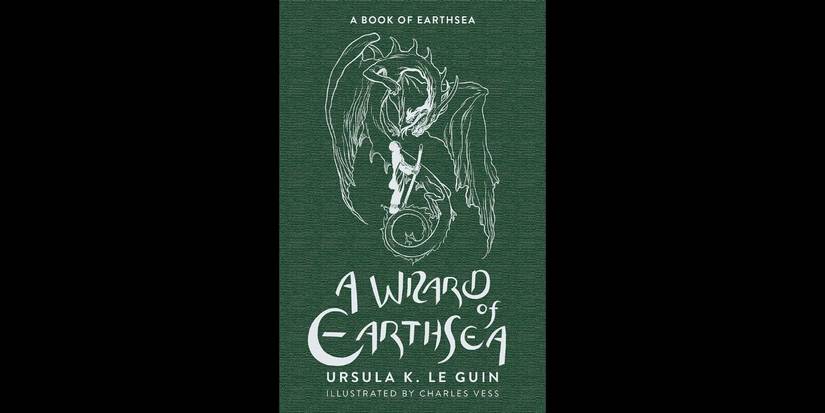 Image via Gollancz
Ursula K. Le Guin's Earthsea cycle is widely recognized as one of the earliest triumphs in worldbuilding, to the point that it is still considered a fan favorite to this day. The story occurs on the eponymous world of Earthsea, which is primarily an ocean planet. Most of the world is covered by a thick layer of saltwater with no continental landmasses. However, there is a small archipelago of islands on which the story takes place.
The islands, of course, are filled with numerous peoples of varying ancestry and ethnicity, many of whom speak unique languages and have unique religions. What's really special about these ethnicities is that they all feel like they could feasibly exist; like they are pulled straight from our world whilst simultaneously resembling nothing we have on Earth. The world interconnects in a perfect way — some islands have risen to form empires, conquering other islands and spreading their influence, giving the world more layers instead of simply featuring one culture per island. The short version is that Earthsea is basically a masterclass in worldbuilding.
'Gardens of the Moon' (1999)
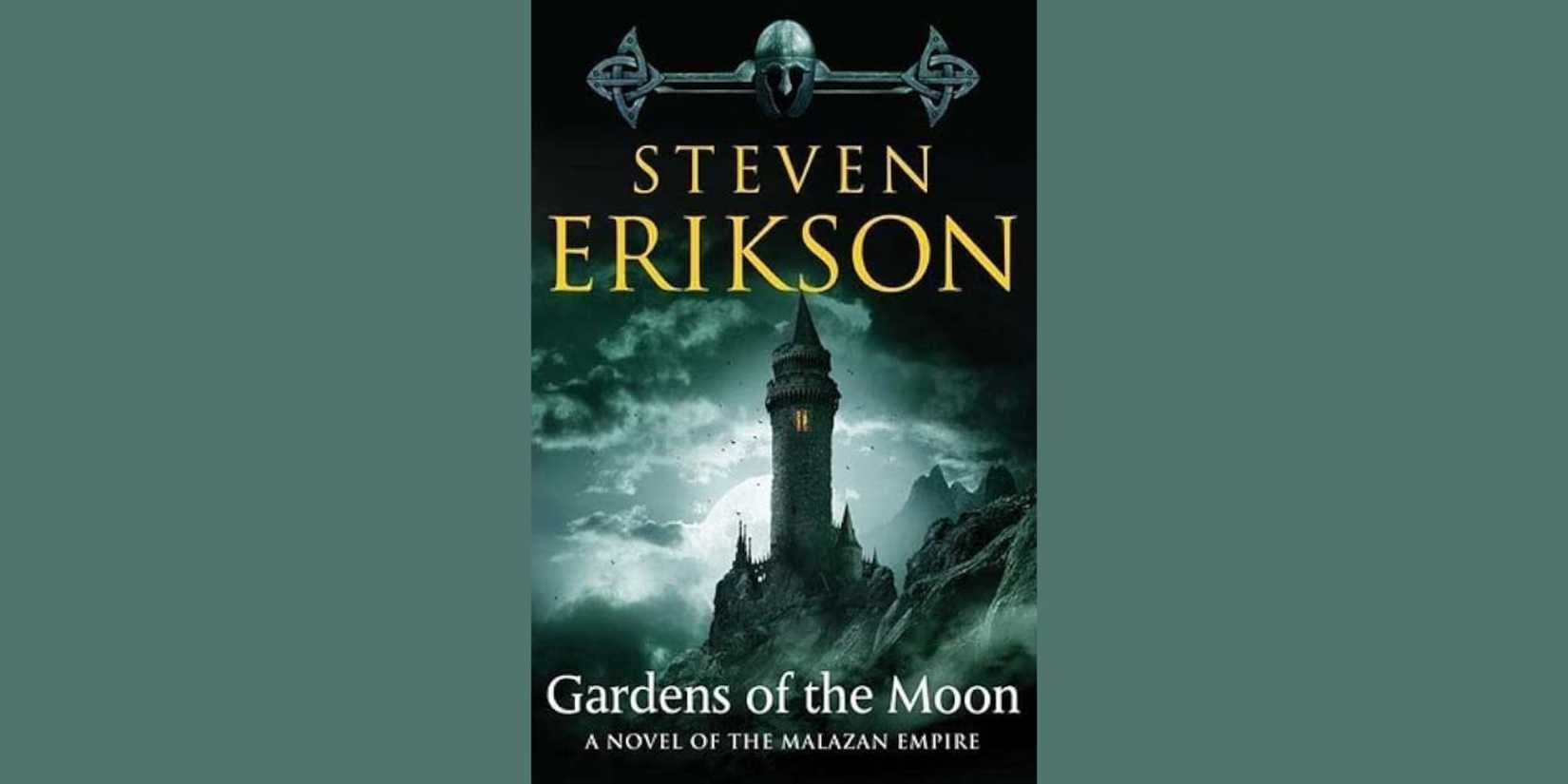 Image via Tor Fantasy
Gardens of the Moon is the first book in Malazan: Book of the Fallen, which initially began as a ten-volume epic fantasy before growing into one of the vastest fantasy universes in modern history. Aside from the main series, other series have been released, which take place at different points in time, fleshing out the world and establishing more of its lore.
In fact, the history of the Malazan Empire goes back farther than most people realize, with the novels detailing hundreds of years of conquest and blood, with little supplementary material to support it. Instead, the worldbuilding comes out naturally through the text and is gradually revealed over time. Better yet, it's a collaborative effort from numerous authors, which means it is growing faster than ever.
Collider Exclusive · 8 Questions · 2 Minutes What Fantasy World Do You Belong To? Middle-earth · Grand Line · The Continent · Camp Half-Blood
Pick your magic, your crew, where you want to wake up and who you would rather be fighting, and we will tell you which world you actually belong in. Four are open to you: an ancient kingdom living through its last good age, an endless sea full of pirates, a continent that pays people to kill monsters, and a summer camp where the Greek gods are extremely real and mostly a nuisance.
💍Middle-earth(Rings of Power)
👒Grand Line(One Piece)
🐺The Continent(The Witcher)
🔱Camp Half-Blood(Percy Jackson)
FIND YOUR WORLD →
01
What kind of power do you want? Every one of these worlds runs on a completely different sort of magic.
ASomething ancient and half forgotten that came down through my family. BSomething completely ridiculous that works in a fight and gets a laugh. CNo magic at all, just training, potions and a very sharp sword. DSomething I inherited from a parent I have barely met.
NEXT QUESTION →
02
Who is travelling with you? Nobody gets through any of these stories entirely on their own.
AA fellowship drawn from every corner of the world who barely trust each other. BA crew I picked up one at a time, all of whom would die for me. CTwo or three people I would never describe out loud as friends. DTwo mates from school who are exactly as out of their depth as I am.
NEXT QUESTION →
03
Where do you want to wake up tomorrow? The best fantasy is usually just somewhere you would genuinely like to live.
AA high city of white stone with the sea somewhere far below. BA ship under sail, with an island ahead that nobody has mapped. CA rented room over a tavern, in a town I am leaving in the morning. DA cabin at a summer camp with everybody else already awake outside.
NEXT QUESTION →
04
How are you making a living out there? Even in fantasy somebody has to pay for the horse.
AI am not, because somebody far older than me decided this was my duty. BTreasure, and I am not always careful about whose it used to be. CI take contracts, since people will pay well for what they will not touch. DI am fifteen and this is all technically a school trip.
NEXT QUESTION →
05
There is something in the woods. What do you do about it? All four of these worlds keep something unpleasant out there in the dark.
ASend word to somebody who has seen this before, then hold the line. BWalk straight in, because it is interesting and possibly edible. CAsk what it has been eating and what the village is willing to pay. DWork out which myth it escaped from, then improvise very badly.
NEXT QUESTION →
06
Who is the villain of your story? The enemy tells you far more about a world than the hero ever does.
AAn ancient evil that has been patient for several thousand years. BA government that has spent a long time calling itself the good guys. CA man who turns out to be far worse than anything I hunt for money. DA god, or possibly my own family, and quite likely both at once.
NEXT QUESTION →
07
What do you actually believe in out there? Every world hands its heroes one rule and asks them to hold onto it.
ASome things are worth defending even when the odds are hopeless. BNobody gets to tell me where I can go or what I am allowed to want. CPick the lesser evil, and never pretend afterwards that it was not evil. DMy friends come before anything a prophecy has to say about it.
NEXT QUESTION →
08
A thousand years from now, how are you remembered? Eight questions in, this is the one that decides your world.
AIn a song, in a language hardly anybody still speaks. BAs the one who got there first and proved the whole thing was possible. CBarely, and mostly wrongly, in ballads I would absolutely hate. DOn a plaque at a camp, read by kids about to do the same thing.
REVEAL MY WORLD →
The Map Is Drawn Your World Is…
Four worlds and four completely different ideas of what a good life looks like. This is where you belong, what it would ask of you, and what you would get back in return.
Middle-earth
You belong somewhere old enough that the mountains have names and somebody can still tell you who gave them. Middle-earth is for people who think the right thing is worth doing even when it will not be finished in their lifetime.
- This is the only world on the list where doing good is understood as a very long defeat, fought anyway, by people who will never see how it ends.
- You are drawn to grandeur, to white cities and deep forges and the sense that almost everything you touch is older than your entire family line.
- The Rings of Power is set in the last good age before it all goes wrong, which gives every quiet scene in it a slightly unbearable weight.
- You would take the hard road, and you would take it on foot.
The Grand Line
You want the sea, a crew, and absolutely nobody telling you where you are allowed to go. The Grand Line is the world for people whose main ambition in life is finding out what is over there.
- One Piece has run for decades on one very simple engine, which is a group of people who each want something impossible and have decided to go and get it together.
- You collect people. Your ideal crew is a set of misfits who were each written off somewhere else before you turned up and offered them a better idea.
- The world is enormous and deliberately ridiculous, and the emotional gut punches land harder because of that rather than in spite of it.
- You would set sail knowing the map runs out, which is more or less the entire point of it.
The Continent
You would rather be feared and useful than liked and useless. The Continent is a world where the monsters are the straightforward part of the job and the people are where it all gets complicated.
- Witchers get paid to do what nobody else will and resented for existing at all, which is a trade most people would refuse and you would probably accept.
- You have no real illusions about which side is the good one, largely because on the Continent that question tends to have a disappointing answer.
- The best of these stories are not about the fighting. They are about somebody with a rigid code being repeatedly cornered into caring about people.
- You would take the coin, finish the job properly, and be out of town before the story got told wrong.
Camp Half-Blood
You want the myths to be real and loose in the actual world, and you want to find out at about thirteen that you were never anywhere near as ordinary as everybody kept telling you.
- Percy Jackson takes the oldest stories we have and drops them into car parks and diners, which makes the gods considerably funnier and a great deal worse.
- You would be the kid every school gave up on, who turns out to have been built for something nobody thought to test for.
- The series is genuinely about friendship rather than destiny, and it says so out loud every time a prophecy tries to get in the way.
- Camp Half-Blood is the real fantasy here: a place where the thing that made you difficult everywhere else is the thing that makes you belong.
↻ RETAKE THE QUIZ
'The Eye of the World' (1990)
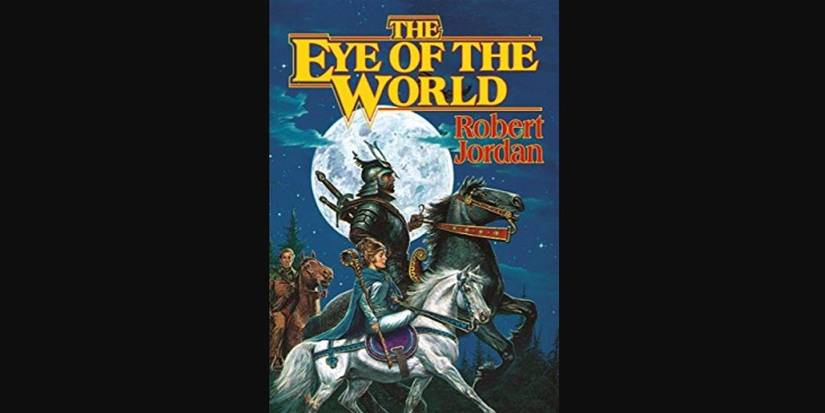 Image via Tor Books
The Eye of the World is the first book in The Wheel of Time series, which actually takes place on Earth. Granted, this is thousands of years in the future, after an apocalypse reverted humanity back to the Middle Ages. Still, the continents have shifted so much, and the cultures are so different that the book is still considered high fantasy: very little of our Earth remains in the story, and it feels like a completely different world.
The late Robert Jordan was excellent at depicting various cultures, with approximately 15 nations making up the Westerlands. Many of these nations are descended from real-world cultures, such as the Borderlanders being inspired by East Asian people, or the Domani being inspired by Middle Eastern people. With the culture comes an enormous history of thousands of years, examining what the world looked like before it was destroyed. Not only does this book's worldbuilding feel fresh and new, but it also presents a lot of concepts that make it click with our world, to the point that it feels like a potential next step for Earth.
'A Game of Thrones' (1996)
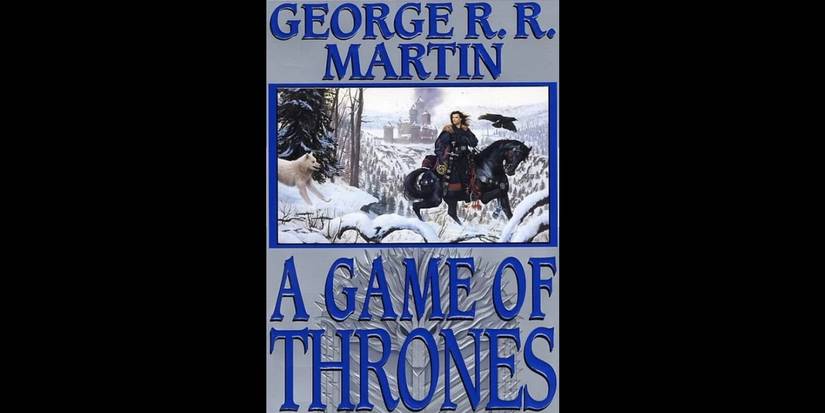 Image via Bantam Spectra
A Game of Thrones is set in Westeros, largely based on Medieval England. That is to say, it is a dark and violent place, marked by intense political corruption, feuding royal families, and unflinching brutality. Elements of magic and monsters are a bit lighter in this story, but they certainly still exist. Yet, where George R. R. Martin truly succeeds is in developing his vast world.
Westeros is the primary, but not the only setting. Much of the story also occurs in the distant land of Essos, which is wider and more mysterious than Westeros. Whilst Westeros is a continent "united" under one banner, Essos is full of various kingdoms, cultures, and languages that are incredibly varied. Of course, readers also know that Martin did a lot to detail the history of Westeros, implementing hundreds of years of dynasties and lineages into his work. This world might be an awful place, but it's certainly a fascinating one.
'The Way of Kings' (2010)
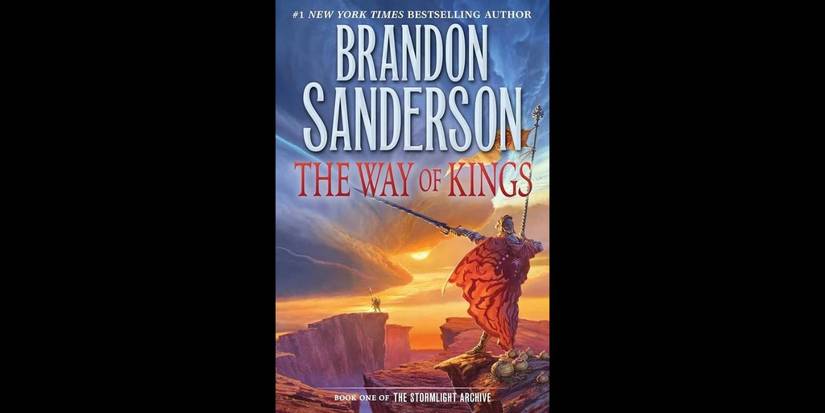 Image via Tor Books
The Way of Kings is the first book in The Stormlight Archive series, which belongs to a shared literary universe known as the Cosmere. The books became famous for presenting worlds that are completely alien to anything humans have observed, and this story is no exception. The story occurs on the planet Roshar, a desolate, windswept world that is almost completely devoid of plant life due to frequent severe storms. Animals are crustacean, able to take shelter in their shells, and the geography mostly consists of broad, rocky expanses without a hint of greenery.
While any of the Cosmere books could realistically be featured on this list, The Stormlight Archive definitely takes the crown, as it bears the most detailed history and the most fleshed-out world. There are roughly 30 sovereign nations, entire cultures and peoples to explore, full religions and languages, and fascinating geographical locations. While the main story of this novel occurs in two distinct places, flashback and interlude sequences allow audiences to explore the broader world, examining how cultures interact with each other and what the rest of the world looks like. This book is just so unlike any other fantasy novel.
'Deltora Quest' (2001)
 Image via Scholastic
Deltora Quest is actually eight books combined into one volume. The series is meant for YA readers, so the books on their own aren't very long. Despite the younger target audience, the amount of history and lore behind the universe is honestly jaw-dropping. The "Deltoraverse," as it is commonly called, encompasses four mainline series, plus two other series set in the same universe, but in vastly different nations. There are also numerous supplementary works regarding history, culture, geography, and zoology.
Deltora Quest is just the first series in this sprawling universe, and it makes sure to establish how the land of Deltora works. As the companions travel across the world, mysterious locations and terrifying creatures are revealed. They encounter various cultures and obstacles, so that Deltora really does feel like a vast, interconnected world. It is a great introduction to fantasy for young readers, one that has an endless amount of material behind it.
'The Fellowship of the Ring' (1955)
 Image via Harper Collins
It should come as no surprise that The Lord of the Rings is on this list, as it boasts one of the most extensive worlds in all of fantasy. Author J. R. R. Tolkien devoted his entire life to developing a huge fantasy universe, comprised of various nations, languages, cultures, and species, and supplemented by thousands of years of detailed histories. While most people know him for The Lord of the Rings trilogy, these novels are, in reality, only a small part of everything he ever wrote.
To this day, decades after his death, material is still being released that adds to the history of Middle-earth. There are well over a dozen tomes that lay out the entire beginning-to-end history of Middle-earth that you can buy. It's one of the most remarkable accomplishments in fantasy, one which is unlikely to be rivalled or topped by anything ever. Nothing will ever even come close to the impact this series had on the genre, nor the plethora of information available about the world.